买手妈妈帮助

买手妈妈邀请码7625568,拼多多24小时内佣金归零怎么办

买手妈妈对接了淘宝、京东、拼多多、抖音等多个电商平台,但很多人不知道的是,不同平台的返利规则差异非常大——从领券方式到结算周期,从佣金计算逻辑到容易踩的坑,每个平台都有自己的一套规矩。先简单解释几个后面会反复提到的概念:佣金(commission)是商家为推广支付的费用,买手妈妈把其中一部分返还给用户;结算日(settlement date)是平台确认订单有效并允许提现的日期;返利(cashback)就是用户最终拿到手的这笔返还金额。如果你只用过买手妈妈在一个平台下单,那可能错过了不少省钱空间。这篇文章就把这几个主要平台的返利差异拆开讲清楚,帮你搞清楚在哪个平台用买手妈妈最划算、最省心。

淘宝/天猫:返利最成熟,但红包陷阱也最多

淘宝是买手妈妈对接最早、返利体系最完善的平台。日常操作流程很顺畅:在淘宝看中商品,复制标题到买手妈妈搜索,领券后跳转回淘宝下单,收货确认后佣金自动结算。淘宝/天猫的结算周期(settlement period)是从确认收货开始算,通常1到15天内会显示可提现的佣金,次月25号统一结算到账。

但淘宝也是最容易出问题的地方。最常见的就是红包互斥——淘宝支付页面的红包、淘金币抵扣和买手妈妈的佣金体系是互斥关系,勾了红包这笔订单的佣金直接归零。我自己的做法是下单前养成习惯:支付页面弹出的红包一律不勾。此外,淘宝的比价保护(price protection)机制也值得关注——如果你浏览了同款商品的多个链接,系统可能会判定你已经比过价了,佣金比例会降低。所以下单时最好从买手妈妈直接跳转到具体商品页面,不要中途去逛别的店铺。

小结:淘宝返利最稳定、券最多,但下单时一定要管住手,别顺手勾红包。

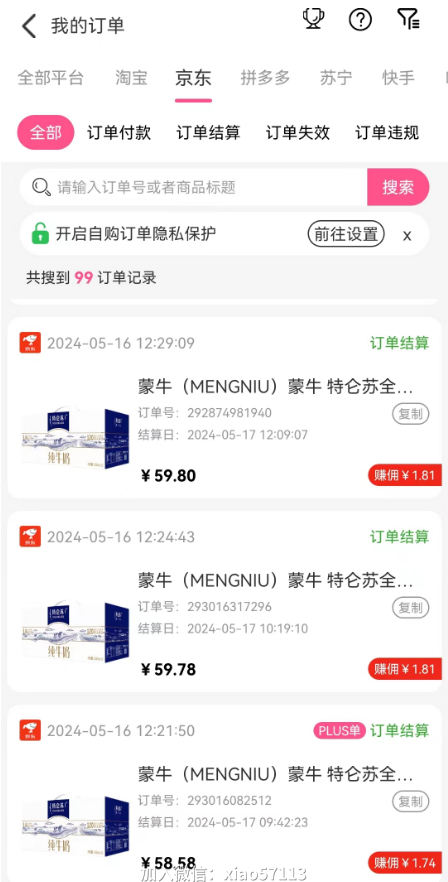
买手妈妈淘宝返利操作示意

京东:自营商品佣金高,京享礼金是个额外加分项

京东在买手妈妈上的返利逻辑跟淘宝不太一样。京东自营(JD self-operated)商品的佣金通常比较可观,而且京东还有一个淘宝没有的机制——京享礼金(Jingxiang Gift Money)。京享礼金是京东给用户的一种小额优惠券,和买手妈妈的返利不互斥,可以叠加使用。也就是说你在买手妈妈领券跳转到京东下单,同时用了京享礼金抵扣了一部分金额,返利佣金依然正常计算。

不过京东也有需要注意的地方。京东第三方店铺(也就是POP商家,即入驻京东平台但非京东自营的外部商家)的返利规则和自营不完全一致,有些第三方店铺参与的推广计划不同,佣金比例可能偏低或者干脆没有返利。另外京东的确认收货时间比淘宝长一些——大部分商品是发货后自动确认,但大件商品需要手动确认,这会影响结算时间。京东的结算周期和淘宝类似,确认收货后次月25号结算。

小结:京东自营返利不错,京享礼金可以叠加是亮点,但第三方店铺要单独看佣金情况。

拼多多:返利不低,但结算周期和比价规则要特别留意

拼多多的返利金额有时候看着比淘宝还高,但这里面有个关键区别:拼多多的结算周期比淘宝和京东长得多。淘宝/京东是确认收货后1到15天出结算日,而拼多多是确认收货后大约两个月才出结算日。也就是说你在拼多多上通过买手妈妈下的单,可能要等将近三个月才能提现这笔佣金。如果你的返利金额不大,这种等待感会很消磨使用积极性。

更要注意的是拼多多的24小时比价规则。如果你在24小时内通过多个渠道(包括浏览器、不同APP)搜索过同一款商品,拼多多会判定你已经在比价了,这笔订单通过买手妈妈下单后佣金可能归零或大幅降低。我的经验是:决定在拼多多买什么之前,先不要在别的地方搜同款,直接从买手妈妈跳转过去下单。

拼多多还有一个容易忽略的点:拼单和单独购买。有时候单独购买的价格反而比拼单便宜(加上返利之后),下单前两个价格都看一下再决定。

小结:拼多多返利金额有吸引力,但结算慢两三个月,比价规则也最严格,适合不急等钱到账的用户。

买手妈妈多平台返利对比

抖音/快手:返利有,但操作路径和商品覆盖还不完善

买手妈妈也对接了抖音和快手,但坦率说,这两个平台的返利体验跟传统电商平台还有差距。抖音商城的返利商品覆盖面不如淘宝京东广,很多在抖音直播间看到的爆款商品,在买手妈妈里不一定能搜到对应的返利链接。操作路径也有所不同——抖音的跳转链路比淘宝长,中间多了一个环节,偶尔会出现跳转失败或佣金追踪不到的情况。

如果你经常在抖音购物,可以试试在买手妈妈里搜一下同款商品,碰到了有返利的当然是用。但不要对抖音/快手的返利抱太高预期,现阶段把它当作一个补充渠道比较合理,主力返利还是集中在淘宝、京东和拼多多这三个平台。

小结:抖音/快手返利覆盖有限,偶尔能用但别指望全覆盖,适合作为补充渠道。

多平台搭配使用的实际建议

了解了各平台差异之后,实际用买手妈妈的策略就很清晰了:日常高频消费(日用品、零食、个护)优先走淘宝,券多返利稳定,结算也快;大件商品和数码家电看看京东自营,佣金高还能叠京享礼金;拼多多适合买那些”正好很便宜”的东西,返利金额相对可观,前提是你能接受两三个月的等待;抖音/快手偶尔碰碰运气,有返利就用,没有就正常买。

有一点值得一提:买手妈妈是导购返利工具,不是商城本身,你在哪个平台买的商品,售后和物流都归那个平台管。返利只是额外的省钱渠道,不应该因为追返利而去改变自己原本的购物决策。比如某个商品京东比淘宝便宜50块但返利只有5块,那直接在京东买就好,没必要为了5块返利绕一圈。

怎么开始用买手妈妈

注册买手妈妈需要填写一个邀请码,我自己长期在用的是 7625568。注册流程很简单:下载APP,手机号注册,填邀请码 7625568,然后绑定你的淘宝、京东、拼多多等电商账号,就可以开始用了。绑定账号这一步不会影响你原有的购物习惯,只是在下单时多走一步从买手妈妈跳转的流程,该领的券领了、该省的钱省了,其他一切不变。

需要说明的是,买手妈妈的返利收益取决于个人消费习惯和推广能力,不是注册了就一定能拿到很多返利。自购省钱的幅度跟你的网购频率直接挂钩,分享赚钱更是需要持续投入时间和精力去维护社群和选品。对此有合理预期,用起来心态会好很多。

常见问题

买手妈妈在哪个平台返利最高?

没有绝对的最高,不同品类的佣金差异很大。一般来说数码家电类京东自营返利不错,日用品和服饰类淘宝券多返利稳定,拼多多偶尔会有个别商品返利很高。建议每次下单前都搜一下看看。

拼多多返利要等多久才能提现?

拼多多确认收货后大约两个月出结算日,次月25号才能提现到支付宝。比淘宝/京东多等将近一两个月,算是拼多多返利最大的”隐性成本”。

同一个商品在不同平台都有返利,怎么选?

最简单的判断方式:对比”到手价减去返利”后的实际花费。哪个平台最终花钱少就选哪个,不用纠结返利比例的高低。返利是省钱工具,不是选择商品的决定因素。

买手妈妈的返利和平台的优惠券能同时用吗?

大部分情况下可以——买手妈妈的返利和商家优惠券不冲突,可以叠加。但要注意淘宝的红包、淘金币抵扣这类平台级优惠会和返利互斥,用了红包佣金归零。

为什么我走买手妈妈下单了但佣金是0?

常见原因包括:付款时勾了红包/淘金币、24小时内比过价(拼多多)、从非买手妈妈入口下单后又返回补链、或者该商品商家未参与推广计划。具体排查方法可以看买手妈妈APP里的佣金明细和订单追踪记录。

买手妈妈帮助

Can You Intentionally Change Your Personality? Evidence from Psychology

The Question Nobody Asks Until They Take a Second Personality Test

Most people who take a personality test treat the results as a fixed label. You score high in Openness, moderate in Extraversion, and low in Neuroticism — and you file that away as a permanent description of who you are. But then something happens. A few years pass, maybe a decade, and you take the test again. The scores shift. Not dramatically, but noticeably. Openness drops a few points. Conscientiousness climbs. You start to wonder: was the first test wrong, or did you actually change?

Personality psychology has been wrestling with this question for nearly a century. The answer that has emerged from decades of longitudinal research is neither as simple as “people never change” nor as optimistic as “you can become anyone.” The truth sits in between — and understanding it has practical implications for how you think about personal growth, therapy, relationships, and the trajectory of your life.

The Evidence for Stability: Why Personality Feels Permanent

There is a reason personality tests feel revealing rather than random. Research consistently shows that personality traits are remarkably stable over time, especially in adulthood. Large-scale longitudinal studies — including the Dunedin Study in New Zealand, which tracked over 1,000 people from birth to midlife, and the Baltimore Longitudinal Study of Aging, spanning decades — have found that rank-order stability for Big Five traits ranges from 0.70 to 0.85 over ten-year periods in adults.

What does that number mean in practice? If you are the most conscientious person in your friend group at age 30, there is a very good chance you will still rank among the most conscientious at age 50. Your absolute score might shift, but your position relative to others tends to hold. This stability is one of the reasons personality researchers consider the Big Five a robust framework — the traits are not fleeting moods or situational states. They reflect enduring patterns in how a person thinks, feels, and behaves across contexts.

The biological foundations of personality contribute to this stability. Behavioral genetics research, including genome-wide association studies, consistently estimates that 40 to 60 percent of the variance in Big Five traits is heritable. Twin studies, adoption studies, and molecular genetics all converge on the conclusion that your genetic makeup sets a range for each trait — a baseline that predisposes you toward certain patterns. This is why personality can feel so deeply ingrained. To some extent, it is built into your biology.

The Maturity Principle: The Predictable Arc of Personality Change

Here is where it gets interesting. Despite the strong stability findings, personality does change — and the changes follow a surprisingly consistent pattern across populations. Personality psychologists Robert Roberts and Daniel Mroczek have documented what they call the “maturity principle”: as people move through adulthood, they tend to become more emotionally stable, more agreeable, and more conscientious, while Extraversion and Openness tend to decline modestly.

The pattern looks roughly like this:

  • Neuroticism decreases — people generally become less emotionally reactive and less prone to anxiety and negative mood swings as they age, with the steepest declines occurring between age 20 and 40.
  • Agreeableness increases — most adults become more cooperative, trusting, and warm over time, particularly during their 30s and 40s.
  • Conscientiousness increases — responsibility, organization, and self-discipline tend to rise through midlife, plateauing around age 50 to 60.
  • Extraversion decreases slightly — social energy and sensation-seeking tend to decline modestly, though the change is smaller than for the other three traits.
  • Openness to Experience decreases — receptivity to novelty and unconventional ideas tends to decline gradually, especially after age 60.

These are population averages, not individual mandates. Some people become less conscientious with age. Some become more extraverted. But the aggregate trend is reliable enough to show up in studies across cultures, including research from the United States, Germany, Japan, and the Netherlands. The maturity principle is one of the most robust findings in personality development research.

What Drives These Changes

The maturity principle raises an obvious question: why does personality follow this arc? Researchers point to several interacting mechanisms.

Biological maturation. The prefrontal cortex, which governs impulse control, planning, and emotional regulation, continues developing well into a person’s mid-20s. As brain maturation progresses, the neurological capacity for conscientious behavior and emotional stability literally expands. Hormonal changes across the lifespan — from the testosterone and cortisol shifts of early adulthood to the slower endocrine changes of later life — also influence trait expression.

Role investment. The most widely supported explanation for personality change is that people invest in social roles that reward certain traits. When you take on a job that requires discipline, a marriage that demands compromise, or a parenting role that necessitates patience, you practice those behaviors repeatedly. Over years, the practice reshapes your habitual responses. A disorganized 22-year-old who becomes a project manager at 32 is not faking their newfound organization — they have built genuine conscientiousness through sustained role demands.

Life experiences. Major events — career changes, relocation, bereavement, serious illness, becoming a parent — can catalyze personality shifts. Research on post-traumatic growth has found that some people who experience significant adversity report lasting increases in Agreeableness and appreciation for life, though the effects vary considerably by individual and circumstance. Positive experiences matter too. Studies have found that people who enter satisfying romantic relationships show decreases in Neuroticism that persist over time, even after controlling for baseline differences.

Can You Change Your Personality on Purpose?

This is where the research gets particularly interesting — and directly relevant to anyone who has ever wanted to become more outgoing, less anxious, or more organized. A growing body of evidence suggests that intentional, volitional personality change is not only possible but achievable through sustained effort.

Pioneering work by Nathan Hudson and Christopher Fraley at the University of Illinois demonstrated that people who set specific goals to change a particular personality trait — and who followed up with behavioral strategies over a 16-week period — showed measurable changes in their Big Five scores compared to control groups. The changes were not enormous, but they were statistically significant and persisted at follow-up assessments.

The strategies that worked in these studies were surprisingly practical:

  • Goal setting and behavioral challenges. A person trying to increase Extraversion might commit to initiating one conversation with a stranger per day. Someone working on Conscientiousness might adopt a daily planning routine. The key was consistency — small, repeated behaviors that gradually reshaped habitual patterns.
  • Environmental restructuring. Changing your circumstances to support the trait you want to develop. Wanting to become more open to experience? Deliberately seeking out unfamiliar environments, reading outside your usual genres, spending time with people who challenge your assumptions.
  • Situational cue modification. Identifying the situations that trigger unwanted trait expressions and adjusting your exposure to them. A person trying to reduce Neuroticism-driven rumination might limit late-night social media scrolling, which research consistently links to mood destabilization.

The research does not suggest that personality is infinitely malleable. A deeply introverted person is unlikely to transform into a natural social butterfly through willpower alone. But moderate, meaningful shifts — moving from the low end to the middle of a trait distribution, for instance — appear to be within reach for people who commit to sustained behavioral change.

Hudson’s subsequent research has also found that some traits are easier to change intentionally than others. Emotional Stability (the low-Neuroticism end of the spectrum) and Conscientiousness tend to respond well to intentional intervention, while Extraversion and Agreeableness show more resistance. Openness, perhaps unsurprisingly, sits in the middle — people can become more open through deliberate exposure to new experiences, but the changes tend to be modest.

The Role of Therapy and Intervention

Clinical psychology provides another window into personality change. A meta-analysis published in Psychological Bulletin examining data from over 144 studies found that psychotherapy can produce meaningful changes in personality traits, particularly Neuroticism and Extraversion. Patients entering therapy for depression or anxiety often show reductions in Neuroticism that exceed the typical annual rate of natural change. The effects are not limited to clinical populations — even people in therapy for personal growth rather than diagnosable conditions show personality shifts.

Cognitive Behavioral Therapy appears especially effective at reducing Neuroticism, likely because it directly targets the negative thought patterns and catastrophic thinking that define the high-Neuroticism profile. Mindfulness-based interventions have shown promise for both Neuroticism reduction and increases in self-reported Conscientiousness, possibly through the attentional discipline that regular mindfulness practice requires.

The practical implication is that personality change is not limited to the slow, natural drift of the maturity principle. Focused psychological intervention can accelerate shifts that might otherwise take years to occur — or shift traits in directions that natural maturation would not produce on its own.

What This Means for Your Personality Test Results

If you take a well-validated Big Five personality test today, your results provide a reasonably accurate snapshot of where you currently stand on each trait dimension. But those scores are not permanent. Your Neuroticism score will likely be lower in ten years. Your Conscientiousness will probably be higher. Your Openness may decline slightly. And if you deliberately work on a particular trait — through therapy, habit change, or environmental restructuring — you may accelerate or redirect those changes.

The most useful way to think about personality test results is not as a permanent label but as a baseline measurement. It tells you where you are starting from, which is valuable information for anyone interested in personal growth. If you want to explore your current profile, tools like personalitree.com offer both Big Five and 16-type personality assessments that provide that starting point — useful not as a verdict on your character, but as data for the changes you might want to make.

The Balanced View: Neither Fixed Nor Fluid

The evidence paints a picture that avoids both extremes. Your personality is not a cage — research on intentional change, therapy, and life experiences demonstrates meaningful plasticity, particularly for Neuroticism and Conscientiousness. But your personality is also not a blank canvas — genetic predispositions, early-life experiences, and decades of habit create inertia that makes radical transformation unlikely.

Perhaps the most useful framework is to think of personality as a landscape with defined boundaries but considerable interior space. You cannot turn a mountain into an ocean, but you can build roads, plant forests, and redirect rivers within the terrain you have. The research on personality change suggests that most people have more room to move within their landscape than they realize — and that the movement happens through the quiet accumulation of daily choices, not through dramatic self-reinvention.

Websites like personalitree.com can help you map that landscape by showing where you fall on the key personality dimensions. The map is not the territory, and the territory is not fixed. But knowing both gives you something more valuable than either alone: the ability to navigate on purpose.

买手妈妈帮助

笔记推广和落地页推广的区别,做聚光投放的商家一定要知道

聚光做线索获客,推广模式选笔记推广还是落地页推广,核心看一个指标:你的业务需不需要用户在广告里先”种草”再行动。用户对行业陌生、需要先了解你是谁,走笔记推广;用户需求明确、搜完就想留联系方式,落地页推广效率更高。选错了,获客成本可能翻两三倍。

笔记推广和落地页推广,本质区别在哪

笔记推广就是在小红书信息流里推一条你发布的笔记(图文或视频),用户看到后觉得不错,点进笔记详情页,再通过主页简介、评论区或私信跟你建立联系。它本质上是一篇”原生内容广告”,用户刷到的时候感知和普通笔记差不多。

落地页推广则是你单独做一个H5页面(也叫商详页),用户点击广告后直接跳转到这个页面,页面上一般有品牌介绍、服务说明和一个留资表单(姓名、电话等)。用户填完表单,你就拿到一条线索。它的逻辑和百度竞价那种搜索广告类似——用户搜一个词,看到结果,点进去留电话。

截至2026年7月,聚光后台对这两种模式已经做了比较清晰的入口区分,建计划的时候可以直接选择推广目标。

简单理解:笔记推广靠”内容吸引”,落地页推广靠”表单转化”,两个模式的获客路径完全不同。

笔记推广的优势和适用场景

笔记推广最大的优势是用户信任度高。因为用户刷到的是一篇看起来像正常分享的内容,心理防备低,愿意花时间看。对于高决策成本的业务——比如装修设计、留学咨询、医美项目,用户不可能看个表单就留电话,他需要先看看你的案例、了解你的专业度。这种情况下,笔记推广的转化路径反而更顺。

另外笔记推广还有一个隐性价值:笔记本身会沉淀在你的账号里,带来长尾的自然流量。一条投过聚光的笔记,哪怕投放停了,只要内容好,后续还能持续被搜索到。据我了解,不少做本地生活服务的商家,聚光停投后仍能从笔记里持续获得咨询,这种”投完还有”的效果是落地页推广做不到的。

适合笔记推广的行业特征:决策周期长、需要建立信任、客单价高、依赖案例展示。

落地页推广的优势和适用场景

落地页推广的核心优势是转化路径短。用户点进去就一个表单,填完就走了,不需要再翻主页、看评论、找私信入口。对于用户已经有明确需求的场景,这种”所见即所得”的路径效率非常高。

比如搬家服务、保洁清洗、驾校报名、英语培训体验课——用户搜了”北京搬家”或者”英语体验课”,他知道自己要什么,不需要被种草,只需要快速找到一个靠谱的商家留个联系方式。这种场景下,落地页推广的线索成本通常比笔记推广低30%-50%。

落地页还有一个好处是数据归因清晰。用户从点击到留资的完整漏斗都在一个页面上完成,漏斗哪一步流失了、哪个字段填写率低,一目了然。而笔记推广的转化链路比较长(曝光→点击→阅读→找联系方式→私信/留资),中间环节多,数据归因难度大。

适合落地页推广的行业特征:需求明确、决策快、客单价低或中等、用户搜完就想联系。

两种模式的获客成本差异

据行业反馈,2026年Q2聚光线索获客的整体参考数据大致是这样:

  • 笔记推广的CPL(单条线索成本)通常在80-300元区间,波动较大,取决于内容质量和行业竞争度
  • 落地页推广的CPL通常在50-200元区间,相对稳定,但线索深度偏浅

表面看落地页成本更低,但这只是”表单提交成本”。笔记推广拿到的线索往往是用户看了完整内容后主动找过来的,意向度明显更高。我做广告代投这行这些年,见过不少商家拿落地页跑出大量线索,但销售打电话过去十个有七个说”没填过”或者”不记得了”——这种线索再多也没用。

对比获客成本时,不要只看CPL数字,更要看线索的有效率和最终成交转化率,这才是真正的ROI(投资回报率)。

实际操作中怎么搭配两种模式

这是我觉得很多商家最该思考的问题。不是二选一,而是根据投放阶段来搭配。

冷启动阶段(账户刚开始投):我一般建议先跑笔记推广,用2-3条不同风格的笔记测试,看看哪种内容能跑出量、跑出线索。这个阶段核心是找”对的内容”,而不是压成本。笔记推广的数据反馈(点击率、互动率、私信开口量)能帮你判断什么内容方向是对的。

放量阶段(内容方向已经验证):如果笔记推广已经跑出了稳定的数据,同时你的行业也适合落地页(比如用户需求明确),可以开一条落地页推广的计划来放大。两条线并行,笔记做深度种草+长尾蓄水,落地页做快速收割+放量补量。

我(豹子)在实际操作中总结的经验是:大多数商家不需要两条线同时大力投,选定一个主模式、另一个小预算测试就够了。把预算集中在一个模式上打透,比两个模式都撒一点钱效果更好。

冷启动用笔记测内容方向,放量阶段选定一个主模式打透,辅助模式小预算跑着就行。

选错推广模式的典型表现

如果你正在投聚光但效果不好,可以对照看一下:

  • 投了笔记推广但线索量很少——可能是你的行业用户不需要种草,直接切落地页试试
  • 投了落地页但线索质量很差、销售打不通——说明用户还没建立信任就让你要电话了,该换笔记推广
  • 两种模式都试了都不行——那问题可能不在模式选择上,而是素材质量、定向人群或者产品本身的问题

选推广模式不是一步到位的事,根据数据反馈调整才是正路。有类似投放需求,可以加豹子的微信xiao57113聊聊具体情况,看看你的行业到底适合哪种模式。

常见问题

聚光笔记推广和落地页推广能同时投吗?

可以,聚光后台允许同一个账户同时创建不同推广目标的计划。但建议预算分配上有所侧重,不要两个模式平均分钱,集中主攻一个效果更好。

笔记推广的线索一般从哪里来?

主要通过用户主动私信、评论区留言要联系方式、或者点击笔记里的组件(如预约组件)来获取。优化目标建议选”私信开口量”,意向度更高。

落地页推广的表单提交率一般多少算正常?

据行业反馈,落地页的表单提交率在5%-15%之间算正常水平。低于5%说明落地页本身有问题(加载慢、信息不清晰、表单太长),需要优化页面而不是调广告。

聚光推广模式选错了能改吗?

可以改,但不是在原计划上直接切换。聚光的推广目标是在建计划时选定的,改模式需要新建计划。旧的计划可以暂停或关掉,不会有额外费用。

买手妈妈帮助

广告投放成本越投越高怎么办?5个优化技巧帮你降本增效

广告投放总花冤枉钱?小红书聚光这样投,ROI直接翻倍

花了几千块投广告,咨询来了十几个,真正成交的不到两个——如果你也经历过这种”钱花了、效果没见着”的窘境,问题大概率出在投放策略,而不是你的产品。近两年我帮不少中小商家调整过投放结构,发现大部分人不是没钱投,而是把钱撒在了不对的地方。这篇内容,我会拆解小红书聚光平台的核心玩法,同时对比巨量引擎的差异,帮你把每一分钱花在刀刃上。

一句话结论:选对平台、控好成本、盯住转化链路,广告ROI完全有机会翻倍。

聚光平台到底适合投什么?

聚光是小红书官方的广告投放平台,简单说就是小红书生态里的”广告后台”。它最大的特点是能精准触达有消费决策意向的用户——小红书的用户来这儿不是刷着玩的,而是带着”我想买点什么”的心态在搜索和浏览。

这意味着在聚光上投放,你的广告天然离成交更近。尤其是美妆、家居、母婴、本地生活这几个品类,聚光的效果往往比纯信息流平台好很多。举个例子,一个做家居收纳的客户,之前一直投信息流广告,获客成本压不下来;转到聚光之后,通过搜索广告+笔记推广的组合,单个咨询成本直接砍掉了近四成。

核心认知:聚光的价值不在于”曝光量大”,而在于”用户购买意愿强”。

广告主最头疼的三个投放痛点

做了这些年广告代投,我(豹子)见过太多广告主踩坑。归结下来,痛点主要集中在三块:

  • 成本控制难:出价高了烧钱快,出价低了拿不到量,账户一跑就波动。
  • 转化链路断裂:广告点击率不低,但用户点进去就走,留资率惨淡。
  • 素材生命周期短:一套素材跑两三天就衰退,持续产出又跟不上节奏。

这三个问题不是孤立的,往往是相互影响的。比如素材质量差,点击率就低,平台会判定你的广告质量不高,进而抬高你的点击单价,形成恶性循环。

投放不是”花钱买流量”这么简单,而是一套从素材到出价到落地页的系统工程。

聚光投放实操:三个提升ROI的关键动作

第一,搜索广告必须做。聚光的搜索广告是按关键词竞价的,用户主动搜”收纳神器推荐”这类词的时候,你的笔记出现在前面,转化率天然就高。建议先用平台的关键词工具挖一批长尾词,竞争小、意图明确,性价比远高于大词。

第二,笔记质量决定广告质量。聚光投放的素材就是小红书笔记,这意味着你的”广告”不能看起来像广告。封面图要有信息量,标题要戳痛点,正文要有真实体验感。平台会给互动率高的笔记更多流量倾斜,所以自然流量跑得好的笔记,拿去投广告效果通常也不差。

第三,善用聚光的”自动出价”功能。手动出价适合预算有限、对行业出价水平很熟悉的投手。如果你刚上手或者预算相对宽裕,可以先用自动出价让系统帮你跑模型,等数据稳定后再切换手动微调,这样既能控制成本,又能保证起量速度。

操作逻辑:先跑通搜索广告,再叠加信息流放量,再用数据反哺素材优化。

巨量引擎:什么时候需要考虑?

巨量引擎是抖音系的广告平台,适合追求大曝光和短视频带货的场景。如果你的产品更适合”种草—拔草”的短链路,或者你本身有成熟的短视频制作能力,巨量确实值得布局。但巨量的流量池大、竞争也激烈,中小预算的广告主如果没有清晰的素材策略,很容易陷入”烧钱测素材”的死循环。建议先把小红书聚光的基础打好,等团队和预算都到位了,再考虑多平台拓展。

五个常见的投放误区

误区一:只看曝光量,不看转化成本。曝光量好看不代表效果好,关键是单次转化成本是否在你能承受的范围内。

误区二:频繁调整出价和预算。平台的算法需要学习期,频繁改动会让模型反复重置,反而跑不出好数据。

误区三:一套素材打天下。不同渠道、不同人群,素材策略要有差异,别指望一张图解决所有问题。

误区四:忽视落地页优化。广告点进去是详情页还是客服页面?加了企微还是引导留言?这些细节直接决定转化率。

误区五:不做A/B测试就下结论。投了三天觉得不行就关掉?至少要跑完一个完整周期、积累足够样本量再判断。

投放是个细活儿,急不来,但每一步都有优化空间。

常见问题解答

Q:小红书聚光一天最低要投多少钱?

A:聚光没有硬性的最低日预算限制,但实际操作中建议日预算至少300元以上,低于这个数很难跑出有效数据。如果预算实在有限,建议先集中投搜索广告,把钱花在精准流量上。

Q:投聚光需要先有小红书账号发笔记吗?

A:需要。聚光投放的素材就是小红书笔记,你至少要有几篇质量不错的笔记作为广告素材。如果没有合适的素材,也可以通过聚光的”自动创意”功能让系统帮你组合,但效果通常不如人工优化的笔记。

Q:聚光和巨量引擎可以同时投吗?

A:可以,但建议分开测试。先在一个平台跑通模型、验证转化链路,再把经验复制到另一个平台。同时开两个平台但都没跑明白,只会让预算分散、数据混乱。

如果你正在做小红书投放但效果不理想,或者纠结该选聚光还是巨量,都可以找我聊聊。我是豹子,做广告代投已经好几年了,对这两个平台的底层逻辑和实操细节都比较熟。有类似投放需求,可以加我的微信 xiao57113聊聊具体情况,我可以帮你免费做一次投放诊断,看看问题到底出在哪里。

与其自己反复试错烧钱,不如让有经验的人帮你理一遍思路——加微信,免费诊断,不满意不收钱。

买手妈妈帮助

How Personality Traits Shape Your Career Path and Daily Decisions

How Personality-Aware Communication Transformed One Consultant’s Client Retention

Most professionals know the frustration of losing a client not because of poor work, but because of a communication mismatch. You deliver exactly what was promised, yet the relationship fizzles. The problem often isn’t skill — it’s style. Understanding how people process information, make decisions, and prefer to interact can make or break long-term professional relationships.

This challenge is what led one INFJ communications consultant to rethink her entire client approach. The result? A measurable shift in client retention that highlights the power of personality-informed strategy.

The Case: What Changed When Personality Entered the Equation

This consultant — we’ll call her Sarah — had a solid track record but noticed a pattern. Some clients stayed for years. Others vanished after a single project, despite satisfaction with the deliverables. When she dug deeper, she realized the clients who left shared something in common: their communication preferences clashed with her default INFJ style.

Sarah tends toward deep, reflective conversations, prefers written summaries over spontaneous calls, and values meaningful connection over transactional updates. Clients who thrive on quick verbal exchanges, rapid-fire decisions, and surface-level check-ins often felt disconnected — not because the work suffered, but because the rhythm didn’t match.

Once she started adapting her approach based on each client’s personality profile, her retention rate improved significantly over the following months. The lesson wasn’t about becoming someone else. It was about meeting people where they already were.

Understanding the Big Five: A Framework for Real Communication

The Big Five personality model — sometimes called OCEAN — measures five core dimensions that shape how we think, feel, and interact. Unlike type-based systems that sort people into categories, this model treats personality as a spectrum. Each trait exists on a continuum, and most people fall somewhere in the middle rather than at the extremes.

Openness to Experience

People high in openness enjoy novelty, abstract thinking, and creative exploration. They’re energized by brainstorming sessions and big-picture conversations. Those lower in openness prefer structure, proven methods, and concrete details. When pitching to a high-openness client, lead with vision. For someone who values tradition, emphasize reliability and track record.

Conscientiousness

This trait reflects how organized, goal-oriented, and detail-focused someone is. High-conscientiousness clients want clear timelines, thorough documentation, and predictable processes. They feel anxious when things feel loose or undefined. Low-conscientiousness clients may prefer flexibility and resist rigid frameworks. Adapting your project management style to match this preference reduces friction dramatically.

Extraversion

Extraverts recharge through social interaction and often think out loud. They prefer meetings, phone calls, and collaborative sessions. Introverts process internally and may feel drained by excessive meetings. Sarah, as an INFJ, naturally gravitates toward introverted communication — but she learned that some clients genuinely need more interaction to feel confident in a partnership.

Agreeableness

Highly agreeable people prioritize harmony, avoid conflict, and seek consensus. They may hesitate to push back on proposals even when concerns exist. Low-agreeableness individuals are more direct, competitive, and comfortable with disagreement. With agreeable clients, create safe spaces for honest feedback. With direct clients, skip the pleasantries and get to the point.

Neuroticism (Emotional Stability)

This dimension measures how prone someone is to stress, anxiety, and emotional reactivity. Clients high in neuroticism need more reassurance, frequent updates, and clear risk mitigation plans. Those low in neuroticism are generally calm under pressure and may find over-communication unnecessary. Calibrating your level of support to their emotional baseline prevents both overwhelm and neglect.

How Sarah Applied These Insights in Practice

Sarah started with a simple step: she incorporated a brief personality conversation into her onboarding process. Nothing formal or clinical — just a natural discussion about how the client prefers to communicate, how often they want updates, and what makes them feel most comfortable in a working relationship.

From there, she tailored three key areas:

  • Update frequency and format — Detailed written reports for high-conscientiousness clients; brief verbal check-ins for those who prefer spontaneity.
  • Decision-making pace — Allowing high-openness clients to explore multiple options before narrowing down; providing decisive recommendations for clients who prefer efficiency.
  • Tone and depth — Matching emotional warmth with agreeable clients; keeping things straightforward and data-driven with low-agreeableness clients.

“I stopped trying to communicate the way I wanted and started communicating the way they needed. That single shift changed everything.” — Sarah, communications consultant

This approach didn’t require a psychology degree or hours of formal assessment. It required curiosity, attentiveness, and a willingness to flex outside one’s natural comfort zone.

Why the Big Five Works Better Than Type Labels Alone

Personality type systems like MBTI offer valuable starting points, but they sometimes create a false sense of fixed identity. The Big Five’s dimensional approach recognizes that people are complex and context-dependent. A client might be highly conscientious at work but low in conscientiousness in their personal life. Treating personality as fluid rather than fixed allows for more nuanced, effective communication.

Research consistently supports the Big Five as one of the most scientifically validated frameworks in personality psychology. Its strength lies in its flexibility — it describes tendencies rather than boxes, which makes it practically useful for real-world interactions.

If you want to explore your own personality profile across these five dimensions, tools like personalitree.com offer free assessments that provide clear, actionable insights without requiring a significant time investment.

Practical Steps You Can Take Today

You don’t need to overhaul your entire approach overnight. Start with these three actions:

Step 1: Observe communication preferences. Pay attention to how your clients or colleagues naturally interact. Do they prefer email or phone? Detailed plans or big-picture summaries? Quick decisions or thorough deliberation? These observations reveal personality patterns without any formal assessment.

Step 2: Adjust one element at a time. Pick a single communication habit to modify — perhaps the length of your emails, the frequency of your check-ins, or the level of detail in your proposals. Small adjustments compound over time and build trust.

Step 3: Have an honest conversation about preferences. Ask directly: “What’s the best way to keep you informed?” Most people appreciate the question and respond with genuine clarity. This removes guesswork and demonstrates that you value the relationship beyond the transaction.

Frequently Asked Questions

Can I really improve client retention just by changing how I communicate?
Communication style is one of the most underestimated factors in client satisfaction. People don’t just buy results — they buy the experience of working with you. When that experience aligns with their natural preferences, loyalty follows naturally.

Do I need a formal personality assessment for my clients?
Not necessarily. Observation and direct conversation go a long way. That said, a structured assessment can provide deeper insight, especially for long-term or high-stakes relationships. Platforms like personalitree.com make it easy to get started with both Big Five and 16-type frameworks at no cost.

What if I’m naturally introverted and most of my clients are extraverts?
You don’t need to become an extravert. You need to recognize that extraverted clients may want more interaction than feels natural to you, and find sustainable ways to provide it — whether that’s scheduling specific check-in times, partnering with a colleague, or using asynchronous communication tools that feel social without being draining.

Is this approach ethical? Won’t clients feel manipulated?
Adapting your communication to someone’s preferences isn’t manipulation — it’s professionalism. Doctors adjust their explanations based on patient understanding. Teachers adapt to different learning styles. Applying the same principle to professional communication is simply good practice.

Start With Yourself

买手妈妈帮助

The Real Reason Self-Awareness Matters More Than Any Label

What Your Personality Type Reveals About Your True Self

Swiping through dating profiles has changed. Where people once scanned for shared hobbies or red flag lists pinned in group chats, a growing number now filter first by personality type. “Not compatible with ISTJs” has become as common as “no smokers” in bio prompts. But is this shortcut actually helping people find better partners — or quietly narrowing the field in ways that backfire?

The shift is measurable. Social media conversations about personality compatibility surged in recent years, and dating platforms have taken notice. Some now surface type-based match suggestions as a headline feature. The appeal is obvious: instead of navigating the messy, ambiguous work of learning someone through months of conversation, you can look at a four-letter code and make a snap judgment about long-term potential.

Why People Are Using Types as a Filter

The psychology behind this trend is straightforward. Uncertainty is uncomfortable. Early-stage dating involves ambiguity — you don’t know whether someone is reliable, kind under pressure, or genuinely compatible until you’ve invested real time. Personality types offer what feels like a cheat sheet. If you’ve read that INTJs “value intellectual depth” and you consider yourself a deep thinker, the match feels pre-validated.

This mirrors a broader pattern: the desire for identity certainty in an overwhelming information environment. When dating apps present dozens of options daily, having a quick elimination framework feels efficient. It reduces the cognitive load of choosing, which is genuinely exhausting.

But efficiency and effectiveness are different things. A system that helps you reject people faster doesn’t necessarily help you find the right person faster.

What the Data Actually Shows

Research on personality compatibility has been running for decades, and the results complicate the neat narratives that type-based filtering promotes.

The most robust finding in personality science is that similarity between partners matters far less than shared behavioral patterns — specifically, how two people handle conflict, communicate needs, and respond to stress. A 2024 meta-analysis found that couples matched on personality type showed no statistically significant relationship advantage over mixed-type couples across measures of satisfaction, longevity, or reported happiness.

What did predict relationship success? Emotional regulation, attachment security, and willingness to repair after disagreements. None of these map cleanly onto any type system.

Consider the popular belief that two introverts make the “natural” match. In practice, couples where one partner leans introverted and the other moderately extraverted often report higher satisfaction — not because opposites attract in some romantic sense, but because the differences create complementary social rhythms. The introvert provides grounding; the extravert maintains external connections. The dynamic works because of behavioral balance, not categorical alignment.

Where Type-Based Filtering Goes Wrong

Three patterns tend to emerge when people use personality type as a primary dating filter:

  • Confirmation bias takes over. Once you decide someone’s type doesn’t match yours, every interaction gets filtered through that lens. A quiet dinner gets labeled “typical introvert behavior” rather than being understood as one person’s preference on one specific evening.
  • Self-fulfilling prophecies form. If you believe ENTJs “need control” and you’re dating one, you start interpreting normal decision-making as controlling behavior. The label creates the perception, not the person.
  • Great matches get overlooked. The person who challenges your assumptions about what “your type” needs might be exactly the partner who helps you grow — but you never find out because the filter removed them before a first date.

There’s a specific frustration surfacing in dating communities around this: people report feeling trapped between knowing the system is imperfect and being unable to stop using it. It’s become social shorthand — easy to reference in group chats, satisfying to categorize, and genuinely difficult to abandon when everyone around you is doing the same thing.

A Smarter Approach to Personality in Dating

Personality information isn’t useless in relationships. It just works better as a lens for self-understanding than as a weapon for filtering others.

Here’s a more productive framework:

  1. Know your own type first. Before using personality insights to evaluate partners, understand what your type reveals about your own patterns. Your type tells you how you tend to process conflict, what drains your energy, and where you’re likely to shut down under stress. That self-knowledge is genuinely valuable.
  2. Look for behavioral compatibility, not type labels. Does this person respond to your distress with curiosity or defensiveness? Can they tolerate disagreement without withdrawing? Do their daily habits align with yours in practical ways? These questions matter more than whether they test as an INFJ or an ESTP.
  3. Use type as a conversation starter, not a verdict. Instead of deciding someone is wrong for you based on their type, use personality insights as a way to ask better questions. “I’ve read that people who prefer sensing tend to show love through actions — does that feel true for you?” opens a conversation. “You’re a sensing type, so we won’t work” closes one.
  4. Test your assumptions against real interaction. Give a connection at least three real dates before mapping it onto any framework. First impressions are notoriously unreliable predictors of long-term compatibility.

If you want to discover your own personality type honestly — without the pressure of a dating context — tools like personalitree.com offer free Big Five and 16-type assessments. Understanding your own patterns through a balanced assessment gives you better information than any profile filter ever could.

Common Questions

Is personality typing in dating always a bad idea?

Not always. It becomes problematic when it replaces genuine curiosity about another person. Using your type to understand your own needs in a relationship is healthy. Using someone else’s type to decide they’re incompatible before meeting them is where it breaks down.

What about attachment styles — aren’t those more reliable?

Attachment theory does have stronger empirical support for predicting relationship outcomes than type-based systems. If you’re choosing a framework to focus on, understanding your own attachment pattern (secure, anxious, avoidant) tends to yield more actionable insight than knowing whether you’re an INTJ or an ENFP.

Should I remove personality type from my dating profile entirely?

That’s a personal choice. Including your type isn’t harmful — it’s shorthand that some people find useful. The issue arises when both you and your matches treat that information as deterministic rather than descriptive. Mentioning it casually is fine. Leading with it as a compatibility test is where the data suggests it stops helping.

What actually predicts a good match?

Shared values around core life questions (children, finances, lifestyle), complementary emotional skills, and — critically — both people’s willingness to work through inevitable friction rather than interpreting it as a sign of fundamental incompatibility.

Try It for Yourself

If you’ve been using personality type as a quick filter in your dating life, consider running a small experiment. For the next month, go on dates without checking anyone’s type first. See whether the people who surprise you — the ones who don’t fit your preconceived notion of “your type” — bring something to the conversation that your usual match wouldn’t.

You might discover that the most useful thing personality typing reveals isn’t whether someone else is right for you. It’s whether you’ve been paying attention to the right signals all along. If you’re curious about where you actually land, a free assessment at personalitree.com can give you a grounded starting point — one that’s about understanding yourself rather than sorting everyone else.

买手妈妈帮助

广告投放ROI总是算不明白?你可能从第一步定向就跑偏了

私域转化率是公域5倍,但90%的品牌做错了什么

品牌做错的核心,在于把私域当成了另一个公域渠道,用同样的投放逻辑和内容策略去运营。

误区一:用公域思维运营私域

很多品牌拿到用户之后,第一反应是继续推广告、推促销。但私域用户的预期不是”被卖货”,而是”被服务”。在小红书和抖音这些公域平台,用户对广告的容忍度本来就低;到了私域还被反复触达,流失率会非常高。

私域的核心价值不是触达频次,而是信任积累。

误区二:忽略SOP和内容体系

没有SOP的私域运营就像没有剧本的直播——主播不知道什么时候该讲产品、什么时候该互动。SOP驱动的直播,每日2到4小时固定主播配合固定话术节奏,转化率远高于即兴发挥。这也是为什么私域直播能做到8%-15%的转化率,而很多品牌还在1%左右徘徊。

误区三:把小红书当硬广渠道

小红书的底层逻辑是种草,不是卖货。用传统信息流的硬广素材去投聚光平台,点击率和转化率都会很低。近两年的行业数据显示,小红书笔记已取代传统详情页,成为美妆、时尚品类的首要转化入口。

在小红书上,内容即广告,广告即内容。

小红书聚光投放的三个常见坑

聚光平台是小红书官方的广告投放工具,整合了信息流和搜索广告。但很多广告主在使用时踩了不少坑,白白浪费预算。

坑一:素材照搬其他平台

抖音跑得好的素材,直接搬到小红书大概率扑街。两个平台的用户画像和内容消费习惯完全不同——小红书用户更偏好真实感和干货感,过于精致或过于商业化的素材反而会被划走。

建议:针对小红书单独制作素材,突出使用场景和真实体验。

坑二:定向设置过于宽泛

为了让广告”跑出去”,很多投放人员会把定向放宽,结果钱花了不少,来的却不是目标人群。聚光平台的定向能力很强,但需要你先把目标用户画像想清楚——年龄、兴趣、消费能力、搜索意图,这些维度组合起来才能实现精准触达。

坑三:只盯CPM,忽略转化成本

CPM(千次曝光成本)低不代表效果好。有些广告主追求低CPM,结果引来大量非精准流量,转化成本反而更高。真正该关注的是CPC(单次点击成本)和最终的CPA(单次转化成本)。

低曝光成本不等于高回报,转化成本才是核心指标。

效果提升的三个关键动作

想要聚光投放效果真正提上去,需要在内容、定向和转化链路上同时发力。

用种草逻辑做素材

好的聚光素材应该像一篇有价值的笔记:有真实使用场景、有具体效果展示、有情感共鸣。近两年头部代理商80%的广告素材已由AI辅助或全自动生成,CTR(点击率)提升25%-40%,中小广告主也该尽快用起来。

精准定向结合人群包

把历史成交用户、高意向用户导入聚光平台,创建相似人群包,可以显著提升投放精准度。同时利用小红书的搜索广告功能,锁定有明确搜索意图的用户,这类用户的转化意愿通常更强。

私域承接提升用户LTV

聚光带来的用户如果只做一次性转化,ROI很难做大。通过微信生态承接流量,用企业微信沉淀用户,配合视频号直播做持续转化,用户的LTV(生命周期价值)可以达到公域的4-8倍,获客成本降低60%。

前端投放获客,后端私域变现,才是完整的增长飞轮。

广告主的常见痛点与破局思路

做投放这些年,我看到广告主反复出现的痛点集中在几个方面:

  • 投放定向失准——CAC(获客成本)居高不下,不知道钱花在哪了
  • 全域数据缺失——各个平台的数据互相割裂,决策靠经验和感觉
  • 素材制作成本高——每天需要大量素材变体,人工产出跟不上消耗速度
  • 转化链路断层——前端引流做了,但后端承接和转化没有系统化
  • 缺乏行业对标——不知道自己的数据在行业里处于什么水平
  • 多平台管理复杂——小红书、抖音、微信视频号各有各的后台,切换成本高

这些问题单独看都不小,叠加在一起就让很多广告主陷入”花钱没效果,不花没流量”的困境。过半广告主对市场持谨慎预期,说明大家的日子都不好过。

如果你正在经历类似的困扰,可以找我做个免费的广告投放诊断,看看预算分配、素材策略和转化链路哪个环节出了问题。

投放问题不可怕,可怕的是不知道问题出在哪。

执行清单:四步走完从投放到转化

把前面的方法论拆成可执行的步骤:

  • 第一步:梳理用户画像——明确目标人群的年龄、兴趣、消费能力、小红书使用习惯
  • 第二步:搭建素材体系——针对小红书单独制作种草型素材,用AI工具批量生成变体做A/B测试
  • 第三步:优化投放设置——精准定向+人群包+搜索广告组合投放,关注CPC和CPA而非单纯CPM
  • 第四步:私域承接转化——建立SOP驱动的运营体系,提升用户LTV

每一步都需要数据反馈来持续优化,建议每周复盘一次投放数据,每月调整一次整体策略。

FAQ:关于小红书聚光投放的常见问题

小红书聚光和信息流广告有什么区别?

聚光是小红书官方的一站式广告投放平台,整合了信息流广告和搜索广告。和单纯的竞价排名不同,聚光更强调内容与广告的融合,适合做种草型推广。核心优势在于能同时覆盖推荐场景和搜索场景。

聚光投放的预算怎么定?

建议从小预算测试开始,比如每天300到500元跑3到5天,观察点击率和转化成本。等素材和定向跑通之后再逐步放量。切忌一开始就大预算铺量,容易因为素材或定向问题浪费大量预算。

为什么我的聚光广告点击率很低?

点击率低通常有三个原因:素材太硬广、定向太宽泛、标题和封面没有触发用户兴趣。建议参考平台内高互动笔记的风格来制作素材,真实感比精致感更重要。

聚光投放和达人种草怎么配合?

最佳打法是”达人种草+聚光加热”——先通过达人发布真实体验笔记建立口碑,再用聚光对高互动笔记进行付费推广放大效果。这种组合的ROAS(广告支出回报率)通常优于纯投放。

私域承接具体怎么做?

核心是建立SOP——从用户添加好友到日常触达、从直播排期到内容规划,都需要标准化流程。视频号直播加社群运营是目前转化效率最高的组合。如果不知道怎么搭建,可以找我聊聊。

做投放这件事,方法和细节同样重要。方向对了,每一分钱才花得有意义。有类似投放需求,可以加豹子的微信xiao57113聊聊具体情况,帮你看看问题出在哪。

买手妈妈帮助

Understanding the 16 Personality Types and What Sets Them Apart

What Your Personality Type Reveals About Your Strengths and Weaknesses

You’re calm and methodical in a one-on-one meeting with your manager, then loud and spontaneous during a brainstorming session with your team. Later that afternoon, you become detail-obsessed while reviewing a project plan — a stark contrast to the big-picture thinker your colleagues saw that morning. If you’ve ever wondered whether this inconsistency makes you a fraud, the answer from personality science is clear: it doesn’t. It makes you human.

Recent research into what psychologists call personality states — as opposed to fixed personality traits — is reshaping how we understand ourselves at work. A major narrative review identified over thirty studies demonstrating that personality expression shifts measurably depending on context. The person you are in a high-stakes presentation isn’t a performance. It’s a legitimate facet of who you are, and understanding both your stable traits and your fluid states can dramatically improve how you navigate professional life.

Personality Traits vs. Personality States: What’s the Difference?

Most people encounter personality through frameworks like the Big Five (Openness, Conscientiousness, Extraversion, Agreeableness, and Neuroticism) or the sixteen-type system rooted in Jungian theory. These models describe your traits — the relatively stable patterns that form the backbone of your character across time and situations.

Personality states, on the other hand, are the temporary fluctuations. They explain why you might score high on Extraversion in one assessment and moderate in another taken two months later. Environmental factors — stress levels, the people in the room, the stakes of the situation — push your behavior along a spectrum rather than locking you into a single mode.

Both levels of personality matter. Your traits tell you where you tend to land on average. Your states tell you how you adapt in real time, and that adaptability is itself a strength.

How Context Shapes Your Behavior at Work

Think about the different “versions” of yourself that show up throughout a typical workday:

  • With leadership: You might become more measured and careful with language, leaning into your Conscientiousness trait while suppressing spontaneous ideas.
  • With peers: You relax into your natural communication style — perhaps more collaborative, perhaps more competitive, depending on the relationship.
  • Under deadline pressure: Agreeableness may dip as you prioritize speed over harmony, or it may spike if you feel the need to rally the team.
  • In creative sessions: Openness surges forward, and you feel permission to take risks you’d normally avoid.

None of these shifts indicate inauthenticity. They reflect a well-documented psychological phenomenon. Research in the personality-states field has shown that individuals who flex across contexts aren’t being fake — they’re engaging a measurable dimension of personality that traditional trait-based models often overlook.

Your Strengths Through the Lens of Personality

Understanding your core personality traits helps you identify where your natural energy flows. Here’s a brief look at what each Big Five dimension reveals about professional strengths:

Openness to Experience: People high in this trait thrive in roles requiring innovation, brainstorming, and adaptation. They might struggle with repetitive processes or rigid routines.

Conscientiousness: These individuals are the backbone of project execution. They deliver reliably. Their potential weakness? Difficulty delegating or flexing when plans change unexpectedly.

Extraversion: High scorers energize teams and excel in client-facing or leadership roles. They may overlook quieter colleagues’ contributions or struggle with deep, solo analytical work.

Agreeableness: Naturally collaborative and empathetic, highly agreeable people build strong team trust. They may avoid necessary conflict or struggle to deliver tough feedback.

Neuroticism (Emotional Sensitivity): Those higher in this trait are often deeply attuned to risk and nuance — valuable in quality assurance or strategic planning. They may experience disproportionate stress during uncertainty.

No trait is “good” or “bad.” Each carries a set of advantages and trade-offs. The value lies in recognizing which patterns serve you and which ones hold you back in specific situations.

Why “Imposter” Feelings at Work Are Often Misdiagnosed

“I feel like a completely different person depending on who I’m talking to. That can’t be normal.”

If this thought resonates, you’re not alone — and you’re not dealing with imposter syndrome. You’re observing your own personality states in action. The anxiety that comes from acting differently with your boss versus your team often stems from the belief that there should be one “authentic” version of you. Personality science says otherwise.

The research is nuanced: while your baseline traits remain relatively stable, the way those traits express themselves shifts based on emotional state, environmental demands, and social dynamics. Recognizing this doesn’t just reduce self-doubt — it gives you a framework for understanding your own professional development.

For instance, if you notice that your Conscientiousness drops significantly under high-stress conditions, that’s not a character flaw. It’s a signal that you may benefit from structured stress-management strategies or workload boundaries that protect your ability to perform consistently.

Practical Steps for Using Personality Insights at Work

Knowing your type is only the beginning. Here’s how to translate personality knowledge into real professional growth:

Step 1: Identify your trait profile. Take a validated assessment that measures both the Big Five traits and, if available, your behavioral tendencies across work contexts. Tools like personalitree.com offer accessible assessments that go beyond simple labeling — they map your strengths and potential blind spots in professional settings.

Step 2: Map your contexts. Write down the major situations you encounter at work: meetings, one-on-ones, presentations, deep-focus work, team collaboration. For each, note which traits tend to amplify and which tend to shrink. This reveals your personality-state patterns.

Step 3: Match strengths to situations. If your Extraversion naturally peaks during group discussions, volunteer to lead brainstorming sessions. If your Conscientiousness shines during structured planning, take ownership of project timelines. Working with your natural flow beats forcing yourself into ill-fitting roles.

Step 4: Build a growth plan around your weaker zones. Areas where your traits underperform aren’t permanent limitations. If Agreeableness drops under pressure and you tend to become curt with teammates during crunch periods, practice specific communication protocols — pre-planned check-ins, for example — that maintain trust even when stress rises.

Step 5: Revisit periodically. Personality isn’t static. As your career evolves, your trait expression may shift. A reassessment every twelve to eighteen months helps you track genuine growth rather than guessing.

The Bigger Picture: Personality as a Living System

The emerging view in personality science is that your character isn’t a fixed point — it’s a dynamic system. Your traits provide the architecture; your states provide the movement. Neither exists in isolation, and both are essential to understanding why you behave the way you do.

This perspective matters especially in today’s workplace, where AI tools, remote collaboration, and shifting team structures demand constant adaptation. The people who understand their personality — not just their label, but the full range of how they show up — are better equipped to navigate change without losing their sense of self.

If you’re curious about exploring your own personality profile in more depth, personalitree.com provides a free, research-informed starting point that covers both the sixteen-type model and Big Five dimensions. No single test captures everything about who you are, but a well-designed assessment gives you a strong foundation for the kind of self-awareness that drives real professional growth.

Your personality isn’t a box you fit into — it’s a map of possibilities. Understanding both your stable traits and your contextual states lets you work with your natural tendencies instead of against them, and that shift alone can change how you experience every meeting, every challenge, and every opportunity at work.

买手妈妈帮助

ZWPlayer网页播放器版权保护指南:从静态水印到溯源追踪

视频被盗录后,水印真的有用吗

做在线教育和企业培训的朋友,几乎都被盗录问题困扰过。花了三个月打磨的精品课程,上线一周就在二手平台以九块九的价格流转,水印被打码裁掉,连是谁泄露的都无从追查。传统的水印方案大多是静态图片或文字,位置固定、信息单一,面对有心的录屏者几乎形同虚设。

真正的版权保护需要”溯源能力”——每一帧画面都要能定位到具体的观看者。这不是理论设想,而是 ZWPlayer 在安全架构上的核心思路。作为一款面向企业级场景的 HTML5 播放器,它在版权保护上的设计深度,远超普通网页播放器的水准。

第一层防护:毫秒级动态溯源水印

ZWPlayer 的水印系统覆盖了静态品牌露出、动态防录屏和全屏平铺三种模式。其中最有价值的是动态溯源水印——它以毫秒级频率在视频画面上随机移动,支持注入运行时变量,比如用户 ID、当前时间戳、设备信息等。录屏者哪怕只截取一段,画面上也会留下完整的溯源信息。

文字水印的模板系统支持 {sys_time} 和自定义变量注入,运营人员可以在后台配置 “用户 {user_id} 于 {sys_time} 观看” 这样的模板,播放器在渲染时实时替换。跑马灯模式让水印在画面中持续游走,截屏裁剪难以完全清除;全屏平铺模式则以网格形式覆盖整个画面,对录屏行为形成强心理震慑。

与许多播放器把水印作为”增值服务”或插件额外收费不同,ZWPlayer 将水印系统作为核心功能内置,通过 JSON 配置即可启用,甚至配有在线可视化水印编辑器,拖拽调整位置、速度、透明度后一键导出配置。这意味着技术团队不需要为水印功能单独排期开发,运营人员自己就能完成配置和迭代。

第二层防护:纯前端离线解析,数据零上传

对于金融、医疗、军工等对数据合规要求极高的行业,”视频文件能不能不上云”是一个刚性问题。很多播放器在播放本地文件时,会静默上传元数据到云端做解析,这在企业内网环境中是不可接受的。

ZWPlayer 提供的 localPlayback 模式,允许用户直接将本地视频文件和外挂字幕拖入浏览器进行预览,全程不经过任何外部服务器。解码、渲染、字幕同步全部在浏览器端完成,网络请求只发生在用户明确主动的操作中。这种纯前端离线解析能力,让它在私有云、内网培训、涉密课程等场景中具备独特优势。

实际部署中,企业可以将 ZWPlayer 打包到内网系统或私有 LMS 平台中,员工通过内网地址访问课程,视频文件存储在企业自有的对象存储或 NAS 上,播放链路完全闭环。官网 zwplayer.com 上的文档对 localPlayback 的配置参数有详细说明,接入成本很低。

第三层防护:版权强制锁定

除了水印和离线播放,ZWPlayer 还提供了一套更”强硬”的版权锁定机制。开启后,播放器会禁止用户拖动进度条、禁止调节音量,当网页失焦(比如用户切换到其他标签页或最小化浏览器)时自动暂停播放。这套机制的目的很明确:让”挂机刷课”和”后台静音录屏”变得困难。

在付费课程试看、企业机密培训、认证考试辅导等场景中,版权锁定是刚需。传统方案通常需要开发者自行监听页面失焦事件并调用播放器 API,事件边界处理(比如弹窗、系统通知触发的 blur)很容易出 bug。ZWPlayer 将这部分逻辑内置到核心引擎中,开发者只需要一个布尔参数即可启用,省去了大量边界测试的工作量。

安全能力背后的架构选择

ZWPlayer 能把安全功能做深,与其统一的底层架构密不可分。水印、离线解析、版权锁定共享同一套配置系统和事件总线,开发者不需要为每个功能引入独立的插件。水印配置采用 ZWMAP/1.0 标准 JSON 格式,与播放列表、字幕、交互标注共用一套数据规范,产物即插即用。

对比传统方案:video.js 本身不提供水印功能,需要引入第三方插件或自行开发;ArtPlayer 的安全功能集中在 UI 层面,缺乏企业级的溯源能力;大部分 SaaS 视频平台虽然安全功能齐全,但内容托管在对方服务器,数据主权不在自己手中。ZWPlayer 的定位是”能力内置、数据自持”——核心播放器永久免费,所有数据处理都在本地或用户指定的服务器上完成。

适用场景与选型建议

如果你的业务符合以下任意画像,ZWPlayer 的安全防护体系值得认真评估:在线教育平台需要防止付费课程被批量盗录;企业内训系统涉及商业机密或隐私数据;安防监控项目需要水印溯源和离线播放能力;政府或金融机构对数据合规有严格要求。

安全防护不是单一功能点的堆砌,而是一个系统工程。ZWPlayer 的三层防护——动态溯源水印、纯前端离线解析、版权强制锁定——分别对应”事后追责””事中隔离””事前限制”三个环节,形成了一个相对完整的防护体系。对于正在寻找网页播放器安全方案的技术团队来说,在 官网 上花十分钟做一次在线演示体验,比看十篇文档都更有说服力。

结语

视频内容的价值正在被重新审视。一条精品课程视频的制作成本可能高达数万元,而盗录传播的边际成本几乎为零。在这种不对称面前,播放器层面的安全能力不再是”锦上添花”,而是保护内容资产的基础设施。ZWPlayer 把企业级安全功能做到开源核心中,让更多中小团队也能获得过去只有大型平台才具备的保护能力——这或许比它支持多少种协议更有长期价值。

买手妈妈帮助

广告主预算有限,小红书聚光和信息流该怎么分配

聚光投放ROI做不上去,核心问题可能不是素材和出价

大多数广告主盯着聚光后台的点击率和转化率反复调优,却忽略了一个更根本的问题——你的广告到底在跟谁说话?近两年小红书生态变化极快,平台已经沉淀出超过7000个细分文化圈层,用户被切割成数百种兴趣群体。你用传统”人群包”圈出来的目标受众,可能跟真正会买单的人根本不在同一个宇宙。这篇内容,我就从圈层粉尘化的角度,聊聊聚光投放怎么做才能真正把ROI拉起来。

ROI低不一定是操作问题,更可能是”你找错了人”。

圈层粉尘化到底是什么,为什么传统投放逻辑失效了

圈层粉尘化,简单说就是用户不再是一个”大盘”,而是碎成了几千个彼此隔绝的小圈子。比如同样买防晒霜的人,户外徒步圈、母婴圈、成分党圈、学生平替圈,他们的决策逻辑、内容偏好、价格敏感度完全不同。过去平台给你圈的”18-35岁女性、关注美妆”这种标签,覆盖的人群可能是几百万,但真正高转化的那一小撮人,藏在某个你根本看不到的细分圈层里。

这就是为什么很多广告主反馈”聚光跑出来的数据看着还行,但ROI就是上不去”。系统给你匹配的流量确实符合你设的标签,但标签太粗,大量曝光给了不会下单的人。钱花出去了,转化没跟上。

传统人群标签像撒网捕鱼,圈层粉尘化时代需要精准下钓。

三个实战中看到的典型投放错位案例

第一个案例,一个做小众香薰的品牌,用聚光投”家居香薰”这个大词,跑了一周CPA(单次获客成本)在80多,ROI不到0.8。后来我们分析发现,搜”家居香薰”的人里有大量是在找出租屋除味的,跟品牌的目标客群完全不搭。把关键词收到”小众沙龙香薰””天然精油扩香”之后,CPA直接降到35左右。

第二个案例,做瑜伽裤的客户,一开始定向”健身女性”,结果聚光把流量分给了大量只看不买的种草型用户。调整到”瑜伽馆常驻””运动穿搭分享”这些更细的圈层关键词后,转化率翻了将近两倍。

第三个案例比较极端,一个做宠物鲜粮的品牌,按平台推荐的人群包投放,流量确实大,但咨询量很低。我们挖了一圈发现,真正买单的人集中在”科学喂养”和”生骨肉”这两个圈层,这些用户对配料表极其敏感,广告内容里不放成分对比就根本打动不了他们。内容策略一调,ROI从1.2拉到了3.5。

每个案例的共同点:不是投放技术有问题,是圈层定位没做对。

先画圈层地图再投放——新操作框架

做聚光投放之前,花一到两天时间做一件事:画一张你所在品类的圈层地图。具体做法是打开小红书,用你的核心产品词搜索,逐页翻笔记,把评论区里真实用户的关注点归类。你会发现,搜同一个词的人,关注点可能完全不同。

画完地图后,把圈层按三档分类:高匹配高转化的核心圈、有潜力可以触达的外延圈、以及看着相关但实际转化差的噪音圈。聚光投放的关键词和定向策略,只围绕前两档来设置,噪音圈果断放弃。

在内容层面,针对不同圈层准备差异化的素材。成分党圈就要讲配方和检测报告,生活方式圈就要拍使用场景和氛围感。一套素材打所有圈层的时代已经过去了。这也是近两年很多广告主感受到的——AI生成的素材虽然量大,但跟竞品高度雷同,缺乏针对性。

圈层地图是聚光高ROI投放的地基,没有这张图,后面所有优化都是在碰运气。

聚光和巨量投放策略的差异

很多人把抖音巨量的投放经验直接搬到聚光上,结果水土不服。巨量的推荐逻辑更偏”货找人”,系统会基于内容兴趣做广泛分发,适合品牌曝光和短视频带货场景。而聚光的逻辑更偏”人找货”,用户带着明确意图来搜索和浏览笔记,这时候你的内容精准度直接决定转化。

所以在巨量上你可以用一套素材跑大盘测试,但在聚光上,素材和关键词的匹配度要求高得多。建议是,聚光投放前先把圈层地图做扎实,每个圈层至少准备两到三组针对性素材,再用小预算测试跑数据,找到转化好的组合后再放量。

聚光拼的是精准度和内容匹配度,不是素材数量。

找对人之后,ROI提升就变得有迹可循

我做广告代投这行六年,见过太多广告主在出价、素材、投放时段上反复折腾,但ROI始终卡在某个瓶颈上动不了。一旦把圈层定位这件事理清楚,后面的优化路径反而清晰了。你的内容该对谁说、用什么话说、在什么场景下说,这些问题一旦有了答案,聚光的算法才能真正帮你把钱花在刀刃上。

如果你现在正被聚光ROI困扰,或者想看看自己目前的投放策略有没有圈层错位的问题,可以加豹子的微信 xiao57113 聊聊具体情况,我可以免费帮你做一次广告投放诊断,看看问题出在哪里。

搞清楚”对谁说”比”怎么说”更重要,圈层定位做对了,ROI才有上行空间。

常见问题

Q:圈层地图要多久更新一次?

建议每两个月重新看一次。小红书的圈层变化很快,新的细分兴趣会不断涌现,旧的圈层关注点也会漂移。定期更新才能保证投放策略不过时。

Q:预算很小的情况下,还值得做圈层拆分吗?

更值得。预算小的时候每一分钱都要花准,与其广撒网把预算稀释掉,不如集中打透一到两个核心圈层,先把ROI做正再考虑扩量。

Q:聚光投放和自然笔记种草应该怎么配合?

理想的节奏是先用自然笔记测试圈层内容方向,看哪种表达方式互动好、收藏高,再把验证过的内容投放到聚光上放大。这样能减少投放阶段的试错成本。

Q:巨量和聚光可以同时投吗?适合什么阶段?

可以同时投,但两个平台的角色要分开。巨量适合做前端曝光和兴趣种草,聚光适合做精准转化。一般建议品牌有一定内容积累后再同时启动两个平台。

买手妈妈帮助

HTML5播放器进阶:ZWPlayer可视化配置完全指南

ZWPlayer 零代码工具链实测:8款可视化编辑器如何重塑视频工作流

在前端开发中,视频播放器的接入往往是一个”说起来简单,做起来繁琐”的环节。写代码配置参数、调试兼容性、对接字幕和弹幕……这些细碎工作占据了大量时间。最近深入体验了 ZWPlayer 这款 HTML5 播放器配套的可视化工具链,发现它把很多问题转化成了”拖拽+配置”就能解决的事情,效率提升非常明显。

不只是播放器,更是一套完整工具生态

多数开发者对 ZWPlayer 的印象停留在”支持协议全”这个层面——HLS、DASH、WebRTC、RTSP 都能播。但实际上,官方在工具层面也下了不少功夫。围绕播放核心,他们做了 8 款在线可视化编辑器,目标很明确:让不写代码的人也能配出专业级视频页面,让写代码的人少写重复逻辑。

这 8 款工具分别是:在线播放器、代码生成器、交互标注编辑器、字幕编辑器、章节编辑器、缩略图生成器、播放列表编辑器、水印编辑器。它们覆盖了从”试播预览”到”最终嵌入”的完整链路,而且全部在浏览器端运行,无需安装任何软件。

感兴趣的话可以直接去 ZWPlayer 官网 体验这些工具,核心功能永久免费。

代码生成器:三行代码变一行配置

对开发者最实用的可能是代码生成器。它的工作逻辑很直观:左侧是可视化配置面板,右侧实时渲染播放器效果。你可以勾选需要的功能——字幕、弹幕、倍速、画中画、水印——调整主题色和控件布局,满意后直接复制生成的 HTML/JS 代码。

实际项目中,我曾经花半小时写初始化参数和样式覆盖,用生成器之后这个时间缩短到了五分钟。更关键的是,生成的代码已经内置了最佳实践,比如微信浏览器的自动播放适配、移动端手势兼容这些容易踩坑的地方,生成器都自动处理了。

交互标注编辑器:让视频变成交互界面

ZWPlayer 内置的 ZWMAP 引擎支持 13 种交互节点,这个在之前的评测文章里很少被详细展开。通过交互标注编辑器,你可以在视频时间轴上拖拽添加热区、测验题、分支跳转、Webview 嵌入等元素。

一个具体的互动视频场景:在视频第 3 分钟弹出一道单选题,学员答对才能继续观看。整个配置过程完全可视化——设定触发时间点、输入题目和选项、绑定跳转逻辑——最后导出一份 JSON 文件,交给开发者在初始化时通过 annotations 参数引入即可。

对于运营人员来说,这意味着不需要等排期,自己就能配出带互动测验的课程视频。对于开发者来说,视频和交互逻辑完全解耦,维护成本大幅降低。

字幕与章节:长视频内容结构化

字幕编辑器支持 VTT、SRT、BCC 多格式导入,可以在线校对时间轴、调整双语排版。配合播放器的字幕全文检索功能,学员输入关键词就能跳转到对应画面,这对知识型长视频非常实用。

章节编辑器则解决了”课程太长,学员找不到重点”的问题。可视化打点分章后,进度条会自动显示章节标记,点击就能跳转。整个操作就像在音乐软件里给专辑加曲目信息一样简单。

水印与缩略图:安全与体验的平衡

水印编辑器支持静态 Logo 和动态跑马灯两种模式。动态水印可以注入 {sys_time} 或自定义用户变量,实现逐帧溯源。缩略图生成器则是纯前端提取关键帧、自动拼合雪碧图,让进度条悬停预览画面成为可能,且不需要后端参与。

这两个工具的组合很有意思:前者保护内容版权,后者提升用户体验,而它们都不需要写代码。

实际工作流:从配置到上线

以一个典型的企业培训视频上线流程为例:先用在线播放器试播验证视频源;接着用章节编辑器拆分课程结构;通过字幕编辑器上传双语字幕;在交互标注编辑器里插入课后测验;用水印编辑器配置企业 Logo 和动态溯源水印;最后打开代码生成器勾选所需功能,一键复制嵌入代码。

整个过程都在浏览器完成,产出物是标准的 JSON 配置文件和 HTML 嵌入代码,可以和 Vue、React 或原生项目无缝衔接。这种”配置即代码”的思路,既保留了灵活性,又降低了操作门槛。

适合谁用?

如果你是在线教育的内容运营,这些工具能让你快速上线带互动测验的课程;如果你是前端开发者,代码生成器和 JSON 配置能帮你省去大量重复劳动;如果你是安防或企业内网项目的实施人员,配合 ZWPlayer 的 RTSP 无插件能力和离线解析模式,可以构建出既安全又易用的视频方案。

工具的交互设计虽然面向非技术人员,但底层的开放性和可扩展性对开发者同样友好。

总的来说,这套工具链的价值不在于某一款编辑器有多惊艳,而在于它们形成了完整的链路:从内容准备、交互设计、安全加固到最终嵌入,每一步都有对应的可视化工具支撑。对于想快速落地视频功能、又不想在播放器细节上耗费太多精力的团队来说,这是一个值得尝试的方案。

买手妈妈帮助

How Your Personality Traits Influence Everyday Decisions and Relationships

Personality Traits Explained: Understanding the Big Five and How They Shape You

Have you ever wondered why you approach challenges differently than your friend, or why certain social situations drain you while others energize you? These patterns in how we think, feel, and behave are rooted in our personality traits. The Big Five personality model is one of the most widely researched frameworks in psychology, offering a clear lens into what makes each of us unique.

Frequently Asked Questions About the Big Five Personality Traits

What exactly are the Big Five personality traits?

The Big Five, sometimes called the OCEAN model, identifies five core dimensions of personality:

  • Openness to Experience — Your curiosity, creativity, and willingness to explore new ideas
  • Conscientiousness — Your organization, self-discipline, and goal-directed behavior
  • Extraversion — Your tendency to seek stimulation and enjoy social interaction
  • Agreeableness — Your compassion, cooperation, and how you get along with others
  • Neuroticism — Your emotional stability and how you respond to stress

Unlike other personality frameworks that sort you into a single type, the Big Five measures each trait on a spectrum. You might score high in openness but moderate in extraversion, creating a combination that is uniquely yours.

How do these traits actually shape daily life?

Research shows that personality traits influence everything from your career choices to your relationships and decision-making style. Someone high in conscientiousness might thrive in structured environments like accounting or project management, while a person high in openness might gravitate toward creative fields like design or writing.

In relationships, understanding these differences can prevent countless misunderstandings. A highly extraverted partner may need more social activity, while an introverted partner may recharge through quiet time alone. Neither approach is wrong — they are simply different expressions of personality.

Is personality fixed, or can it change?

This is one of the most common questions in personality psychology. While your core traits tend to remain relatively stable throughout adulthood, research in recent years has shown that personality can shift in response to life experiences, deliberate practice, and personal growth. People often become slightly more agreeable and conscientious as they age.

The key insight is that while your baseline tendencies may be consistent, your behavior is not locked in stone. Awareness of your traits gives you the power to adapt your approach when a situation calls for it.

How is the Big Five different from MBTI?

The MBTI (Myers-Briggs Type Indicator) assigns you to one of 16 personality types based on four dichotomies. The Big Five, on the other hand, measures five independent dimensions on a sliding scale. Many researchers consider the Big Five to be more scientifically reliable because it captures the nuance of personality rather than placing people in rigid categories.

That said, both models have their place. MBTI can be a fun starting point for self-reflection, while the Big Five offers a more detailed picture of your behavioral tendencies.

Can knowing my personality traits help with career decisions?

Absolutely. Understanding where you fall on each dimension can guide you toward work environments and roles that align with your natural strengths. High extraversion combined with high agreeableness might suggest careers in sales, teaching, or counseling. High openness paired with lower agreeableness might point toward research, law, or entrepreneurship.

The goal is not to limit yourself but to make informed choices that reduce friction and increase satisfaction in your professional life.

Where can I take a reliable Big Five assessment?

If you want to discover your own personality profile, tools like personalitree.com offer free assessments that measure your Big Five traits and provide clear, actionable insights. The results can serve as a starting point for deeper self-understanding.

How Personality Traits Influence Relationships

Personality compatibility is not about finding someone who is identical to you — it is about understanding where your traits complement or create tension with another person’s. High agreeableness in both partners often leads to smooth communication, while a mismatch in neuroticism levels can create friction around stress management.

Couples who take the time to understand each other’s personality tendencies report greater satisfaction and fewer conflicts. Even at work, recognizing that a colleague processes information differently than you do can transform a frustrating dynamic into a productive collaboration.

Using Personality Awareness for Personal Growth

Self-awareness is the foundation of personal development. When you understand your natural tendencies, you can:

  • Play to your strengths rather than fighting against your nature
  • Identify areas where growth would be most impactful
  • Improve communication by understanding how others perceive you
  • Make career and life decisions that align with who you actually are
Knowing yourself is the beginning of wisdom. — Aristotle

The Big Five model gives you a research-backed vocabulary for understanding yourself and others. It moves the conversation from vague labels like “introvert” or “perfectionist” to a more nuanced picture of your personality landscape.

FAQ: Quick Answers to Common Questions

Which Big Five trait is most strongly linked to success?

Conscientiousness consistently shows the strongest correlation with academic and professional achievement across studies. It reflects your ability to set goals, stay organized, and follow through — skills that matter in virtually every field.

Is there a “best” combination of traits?

No. Each trait carries both advantages and challenges depending on the context. High neuroticism, for example, can fuel anxiety but also sensitivity and empathy. High extraversion drives social connection but can sometimes lead to overcommitment. The goal is balance and self-understanding, not perfection.

How long does a Big Five assessment take?

Most well-designed assessments take about 10 to 15 minutes. The depth of insight you gain from that small investment of time is remarkable.

Start Your Self-Discovery Journey

Understanding your personality is not about putting yourself in a box — it is about gaining clarity on the patterns that shape your thoughts, behaviors, and relationships. The Big Five framework offers a scientifically grounded path to that clarity.

If you are curious about your own profile, take a free assessment at personalitree.com and see where you fall on each dimension. The insights might surprise you — and they might just change how you navigate your career, your relationships, and your everyday decisions.

Take the first step today. Discover your personality traits and start working with your natural strengths rather than against them.

买手妈妈帮助

聚光和巨量千川到底怎么选?不同预算下的投放策略拆解

你的广告被AI”吃”了——消费者决策链路已被大模型截断

当消费者打开对话框问AI”帮我推荐一款适合敏感肌的面霜”,而不是打开百度输入关键词的时候,你花三年烧出来的搜索广告投放体系,基本就失效了。这不是危言耸听,而是正在发生的事。我是豹子,做广告代投这行好几年了,最近一年最明显的变化就是:越来越多客户跑来问我,”搜索量没掉,怎么线索质量越来越差?”答案很简单——你的目标用户根本没走你铺好的那条路了。

GEO正在截断传统搜索广告的流量命脉

GEO,全称Generative Engine Optimization(生成式引擎优化),是指针对AI对话式搜索结果进行品牌可见度管理的新策略。过去用户搜索”最好的抗老精华”,百度给你列出一堆竞价广告位;现在用户问ChatGPT、问豆包、问Kimi同样的问题,AI直接给出一个”推荐清单”——你的品牌在里面还是不在里面,取决于AI抓取了哪些内容作为训练和检索来源。

传统搜索广告建立在”用户搜关键词→看到广告→点击→转化”这条链路上。GEO把中间的搜索和点击环节直接跳过了。消费者看到AI的回答后,决策已经完成了一大半。有研究显示,AI生成式搜索正在让传统搜索广告的点击率持续走低,部分垂类领域降幅超过30%。更可怕的是,90%的广告主还沉浸在”搜索广告还能再撑几年”的幻觉里,完全没有意识到自己的内容资产正在被重新洗牌。

传统搜索广告的底层逻辑正在被AI对话式搜索架空,广告主越早布局GEO,越能在新一轮流量分配中占据位置。

小红书和聚光平台凭什么在这轮变局中站稳了

很多人觉得搜索广告失效了,所有广告形式都危险了。其实不是。小红书和聚光平台恰恰是这轮变局中受益最大的玩家。原因有三个。

第一,活人感内容天然契合AI抓取逻辑。AI对话式搜索在生成推荐时,高度依赖真实用户的UGC内容。小红书上大量的种草笔记、真实测评、使用体验,正是AI最喜欢抓取和引用的内容类型。你在小红书铺的每一篇内容,都在为你的品牌在AI搜索中的”可见度”加分。这是百度竞价广告做不到的事。

第二,小红书种草到拔草的链路是完整的。用户在小红书上被种草、看测评、比价格、下单购买,整个决策闭环在一个平台内完成。聚光平台作为小红书官方的广告投放工具,打通了从内容曝光到电商转化的全链路。你投的每一分钱都能看到从笔记阅读到商品点击再到最终成交的完整数据,不像有些平台,钱花了连用户去了哪都不知道。

第三,聚光平台的投放颗粒度越来越细。聚光支持按兴趣标签、搜索词、人群画像进行多维度定向。最近聚光还加强了与小红书电商数据的打通,投放优化师可以实时看到笔记带来的GMV贡献。对于追求ROI的广告主来说,这种数据透明度意味着预算分配有据可依,不用靠猜。

小红书生态的核心竞争力在于:用户相信”人”而不是”广告”。聚光平台把这种信任变成了可量化、可投放的商业资产。

小红书+聚光的组合在生成式搜索时代有天然优势,品牌在这里积累的内容资产不会因为AI崛起而归零,反而会增值。

广告主的真实痛点:钱花了,效果却越来越难衡量

做了这么多年广告代投,我见过太多广告主在投放上栽跟头。说到底就是三个核心痛点。

获客成本居高不下是第一道坎。近两年各大平台流量红利见顶,同一个关键词的竞价成本翻了不止一倍。有报告显示,超过40%的营销人员认为广告从创建到上线周期太长,等到素材上线,热点早过了。更扎心的是,部分平台最高有30%的营销预算被浪费在无效曝光上。钱花了不少,有效线索没多几个。

素材衰减速度超乎想象是第二道坎。社交平台短视频广告的生命周期只有7到14天。一条素材上线10天后,点击率可能下降40%到60%。很多广告主还在用一套素材反复投放,ROI当然越来越差。创意生产跟不上消耗速度,是当前效果广告最大的瓶颈之一。

全域数据割裂是第三道坎。广告主在小红书种草、在抖音做直播、在微信朋友圈投广告、在淘宝做直通车,每个平台的数据都是孤岛。想算清楚一个用户从第一次看到广告到最终下单经历了哪些触点,几乎是不可能的事。全域营销喊了两年,真正能打通数据的品牌少之又少。

获客成本高、素材衰减快、数据割裂严重,这三大痛点正在倒逼广告主重新审视每一分钱的去向。

怎么破局:一份实操建议

面对GEO冲击和上述痛点,广告主可以做这几件事。

立刻开始布局GEO内容资产。梳理你的品牌在AI搜索中的现有可见度,检查主流AI对话工具在推荐相关品类时是否会提到你的品牌。如果没有,说明你在AI的”推荐名单”里还不存在。从现在开始,在小红书、知乎等平台布局高质量的专业内容,这些内容有更大概率被AI引用。

把小红书和聚光作为内容资产建设的核心阵地。与其把预算分散在十个平台每个都蜻蜓点水,不如集中资源在小红书上深耕。用聚光平台做精细化投放,同时持续产出真实、有深度的种草内容。这些内容既能在小红书内带来转化,又能为品牌在AI搜索中积累”被引用”的资本。

建立素材快速迭代机制。别再指望一条素材打天下。按照7天一个周期准备素材替换方案,用A/B测试快速验证哪类创意有效。近两年AI辅助创意生产的工具已经很成熟了,善用这些工具降低创意生产成本。

GEO布局越早越主动,小红书内容资产越厚越抗风险,素材迭代越快ROI越稳。

写在后面

广告投放这件事正在经历一场底层逻辑的重构。搜索引擎不再是唯一的决策入口,AI对话式搜索正在改写游戏规则。但变局中也藏着机会——那些提前布局内容资产、选对平台、持续产出好内容的品牌,会在下一轮流量分配中拿到更大的份额。

如果你正在做广告投放,或者准备开始做,但不确定自己的策略是否还跟得上当前的变化,可以免费帮你做一次广告投放诊断,看看你的预算花在了哪些”正在失效”的渠道上,哪些渠道还有红利可以吃。有类似投放需求,可以加豹子的微信xiao57113聊聊具体情况。

常见问题

GEO和SEO有什么区别?

SEO(搜索引擎优化)针对的是百度、Google等传统搜索引擎的排名算法,核心是关键词布局和外链建设。GEO(生成式引擎优化)针对的是AI对话式搜索,比如ChatGPT、豆包等,核心是让你的品牌内容被AI识别并推荐。两者不是替代关系,但GEO的重要性正在快速上升。

小红书投聚光和投薯条有什么区别?

薯条是内容加热工具,主要帮你把已发布的笔记推送给更多用户看,适合测试内容质量。聚光是完整的广告投放平台,支持多种广告形式、定向人群、转化跟踪和数据分析,适合有明确投放目标和预算规划的品牌。做效果广告建议直接用聚光。

广告预算有限,应该先投哪个平台?

如果目标用户是18到35岁的女性消费者,优先考虑小红书。小红书的种草属性强,用户消费意愿高,聚光平台的数据反馈也比较及时。如果目标用户更偏大众化或下沉市场,可以考虑抖音信息流。关键是根据自己的产品和用户画像来选,不要盲目跟风。

怎么判断自己的广告有没有被浪费?

几个核心指标:看完播率(视频广告有多少人看完了)、点击率(CTR)、转化成本(单个线索或成交的成本)、以及投放周期内的ROI变化趋势。如果CTR持续走低、转化成本持续走高,大概率是素材或定向出了问题。可以找专业的人帮你做一次投放诊断,快速定位问题所在。

AI搜索时代品牌应该怎么做内容?

核心原则是”写给人看,也写给AI看”。内容要有专业深度、真实体验、具体数据支撑,这三类内容最容易被AI引用。避免纯广告性质的软文,多做知识分享和真实测评类内容。在小红书、知乎等平台持续产出这类内容,就是在为品牌的AI搜索可见度打地基。

买手妈妈帮助

Is Extraversion a Trait or a Spectrum? What the Big Five Reveals

What Extraversion Actually Measures — and Why the Stereotype Misses the Point

When most people hear “extravert,” they picture someone who dominates conversations, feeds off group energy, and feels uncomfortable alone. That image is not entirely wrong, but it is incomplete in ways that matter. In the Big Five personality model, Extraversion is one of five continuous dimensions — not a binary label — and it captures far more than party preferences. Research consistently shows that understanding your position on this spectrum offers practical insights into your career trajectory, emotional well-being, social behavior, and even the music you gravitate toward.

If you are curious about where you fall on this and other personality dimensions, platforms like personalitree.com offer free Big Five and 16-type assessments that take roughly ten minutes and present results on a continuum rather than forcing you into a box.

The Facets Beneath the Surface

Extraversion in the Big Five is not a single quality. Psychologists break it down into several sub-dimensions, each capturing a distinct flavor of social energy:

  • Warmth — how approachable and affectionate you are toward others
  • Gregariousness — your preference for the company of others versus solitude
  • Assertiveness — how readily you take charge, speak up, and influence situations
  • Activity level — the pace at which you operate and your need for stimulation
  • Excitement-seeking — your appetite for novelty, risk, and high-intensity experiences
  • Positive emotion — how intensely and frequently you experience cheerfulness, enthusiasm, and joy

This layered structure explains why two people can both score moderately high on Extraversion yet behave differently. One might be warmly gregarious but risk-averse; another might be assertive and excitement-seeking but emotionally reserved. The trait is a cluster, not a monolith.

The Biology: Dopamine, Arousal, and the Brain

Hans Eysenck, whose work laid groundwork for the Big Five, proposed that extraverts and introverts differ in baseline cortical arousal. Introverts, in his model, have higher resting arousal and therefore seek less external stimulation. Extraverts operate with lower baseline arousal, driving them toward social interaction, novelty, and excitement to reach an optimal state of alertness.

Modern neuroscience has refined but broadly supported this idea. Extraversion correlates with dopamine system activity — specifically, the brain’s reward processing. Research using PET scans has found that extraverts show stronger dopamine responses in regions tied to reward anticipation, such as the striatum and nucleus accumbens. This does not mean extraverts are happier in general. It means they experience social interaction and novelty-seeking as more rewarding at a neurological level.

A 2026 study on personality and musical preferences added another layer: extraverts consistently gravitate toward stimulating, high-arousing music, while introverts prefer calming, low-arousal compositions. These are not random aesthetic choices — they reflect deeper differences in how the nervous system manages stimulation.

Extraversion Is a Spectrum, Not a Switch

One of the most persistent misconceptions is that people are either extraverts or introverts. The Big Five treats Extraversion as a continuous dimension. Most people cluster somewhere in the middle, displaying what psychologists sometimes call “ambivert” tendencies — they enjoy social gatherings but also need solitude to recharge, and the balance shifts depending on context, mood, and the people involved.

This is not fence-sitting. It reflects how the trait actually distributes in the population. When researchers administer validated Big Five questionnaires, they find a roughly normal bell curve. Only a small percentage sit at the extreme poles. The MBTI, by contrast, forces everyone into a binary E-or-I category, which is part of the reason psychologists criticize its methodology — someone who scores 51% toward Extraversion gets labeled the same as someone at 95%, even though their social behavior may differ considerably.

Extraversion and Career: Beyond the “People Person” Cliché

Extraversion does predict certain work outcomes, but the relationship is more nuanced than popular career advice suggests. Meta-analyses show that extraverts tend to perform better in roles requiring interpersonal influence — sales, management, public relations, negotiation. Extraversion is also linked to leadership emergence: extraverts are more likely to be perceived as leaders and to seek leadership positions.

However, extraverts are not universally better employees. Research points to specific downsides in certain contexts:

  • Impulsivity — high extraversion correlates with faster but sometimes less careful decision-making
  • Overconfidence — extraverts tend to overestimate their performance relative to peers
  • Distraction — the desire for stimulation can make extraverts less effective in roles requiring sustained solitary focus
  • Team dynamics — teams with too many extraverts can experience competition for speaking time, reduced listening, and groupthink

A 2026 workplace trend analysis highlighted that extraverted applicants tend to use more self-promotion during interviews, which can inflate recruiter perceptions of competence beyond actual ability. Structured interviews with standardized questions reduce this bias, which is one reason industrial-organizational psychologists advocate for them.

The Complicated Link Between Extraversion and Happiness

Studies consistently find a moderate positive correlation between Extraversion and self-reported happiness. Extraverts report more frequent positive emotions, higher life satisfaction, and greater social support. But interpreting this finding requires care.

The correlation is partly driven by the “positive emotion” facet of Extraversion — extraverts genuinely experience more frequent and intense positive emotional states. However, this does not mean introverts are doomed to unhappiness. The relationship is moderated by several factors:

  • Quality over quantity of social interaction — introverts who maintain a few close, meaningful relationships report well-being levels comparable to extraverts with larger networks
  • Cultural context — in collectivist cultures, extreme extraversion can be perceived as inappropriate or self-centered, potentially reducing social reward
  • Role fit — extraverts in solitary roles and introverts in highly social roles both report lower satisfaction

The evidence suggests that happiness comes not from being extraverted per se, but from matching your level of social engagement to what your personality finds rewarding.

How Extraversion Changes Over Time

Personality is not fixed for life, and Extraversion follows a well-documented developmental arc. Cross-sectional and longitudinal studies show that, on average, extraversion tends to decrease slightly as people move through adulthood — particularly after age 30. This is part of a broader pattern researchers call the “maturity principle”: as people age, they generally become more emotionally stable, more agreeable, and more conscientious, while becoming slightly less extraverted and less open to novelty.

This does not mean every individual becomes quieter with age. The trend reflects population averages. Major life events — career changes, parenthood, relocation, health crises — can produce meaningful individual variation. Some people actually become more extraverted in retirement, when social and professional constraints shift. The point is that your extraversion score at age 20 is not a life sentence.

The Dark Side: When Social Energy Becomes a Liability

High extraversion has an under-discussed shadow. When the drive for stimulation and social reward becomes extreme, it can manifest as:

  • Social burnout — extraverts who cannot tolerate being alone often fill every evening with plans, eventually reaching a state of emotional depletion that mirrors the introvert’s social fatigue
  • Risk-taking — the excitement-seeking facet connects to impulsivity, and research links high Extraversion with higher rates of risky behaviors, from reckless spending to substance use
  • Shallow relationships — extraverts who prioritize breadth over depth in social connections may lack the confidants that predict emotional resilience during crises
  • Attention dominance — in group settings, high-extraversion individuals can unintentionally monopolize conversations, limiting space for more reflective voices

Understanding these trade-offs is part of what makes self-awareness through personality assessment genuinely useful. A personality test is not a judgment — it is a map that shows you both the territory you navigate well and the terrain where you might stumble.

Practical Takeaways

Extraversion is one of the most studied personality dimensions in psychology, and for good reason — it shapes how we connect with others, how we perform at work, and how we experience joy. A few evidence-based conclusions worth remembering:

  • Extraversion is a spectrum. Most people are not purely extraverted or introverted, and rigid labels obscure more than they reveal.
  • The trait has biological roots in dopamine and cortical arousal, but it is not genetically deterministic — experience, culture, and intentional behavior all moderate its expression.
  • High extraversion has genuine advantages (social confidence, leadership emergence, positive emotions) and genuine costs (impulsivity, overconfidence, potential shallowness in relationships).
  • The extraversion-happiness link is real but moderated by social context, cultural norms, and role fit.
  • Extraversion tends to decrease modestly with age, though individual trajectories vary considerably.

For a clearer picture of where you stand — not just on Extraversion but across all Big Five dimensions and the 16-type framework — personalitree.com provides both assessment models in one place, which makes it easier to see how your extraversion score connects to your broader personality profile rather than treating the trait in isolation.

买手妈妈帮助

Understanding Personality for Better Self-Awareness

Personality Decoded: What Your Traits Reveal About You

Marketers have spent decades obsessing over demographics. Age, gender, zip code — the usual suspects. But here’s what most teams miss entirely: two 34-year-old women in the same city can respond to completely opposite messaging because their underlying behavioral drivers are worlds apart. That gap between “who someone is on paper” and “how they actually make decisions” is where the real leverage lives.

Recent psychometric research has moved well beyond surface-level audience segmentation. A massive 2026 study of over 1.3 million participants identified a refined personality structure — Social Adaptation and Spontaneous Mentation — that outperforms traditional frameworks at predicting behavioral patterns. Meanwhile, geneticists have mapped over 90 genome-wide loci tied to personality meta-traits, confirming that behavioral tendencies run far deeper than demographics can capture.

The practical implication for anyone crafting copy, building funnels, or designing product experiences? Personality-based segmentation isn’t a novelty — it’s a precision tool that traditional A/B testing fundamentally cannot replicate.

Why Demographic A/B Testing Hits a Ceiling

Standard A/B testing optimizes surface elements: headlines, button colors, CTA phrasing. It tells you what performed better, but never why — and certainly not for whom. Two variations might split 50/50 across an audience while masking massive variance within each segment.

Think of it this way: showing the same discount headline to a security-focused buyer and an experience collector is like handing the same menu to someone craving comfort food and someone adventurous. Both might click, but for entirely different reasons — and you’ll never learn which one from aggregate conversion data.

Micro-personality segmentation flips this model. Instead of testing creative against a monolithic audience, you segment by behavioral traits first, then tailor messaging to each group’s internal logic. Reports from early adopters in direct-to-consumer marketing suggest average ROAS improvements of 582% when creative is mapped to personality-driven segments rather than demographic buckets.

The Five High-Performing Personality Segments

Here’s a practical framework built from 47 behavioral micro-traits distilled into five actionable segments. Each one represents a distinct decision-making engine — and each demands its own copy formula.

1. Achievement Optimizers

Core driver: Progress, measurable results, efficiency. They want proof that something works and clear metrics showing improvement.

Copy formula: Lead with outcome data. Use specificity. Frame the product as a lever that multiplies effort they’re already investing.

“Cut your campaign setup time in half — teams using this framework launch tests 3x faster with fewer revision cycles.”

2. Social Validators

Core driver: Belonging, social proof, consensus. They look for signals that others like them have made this choice successfully.

Copy formula: Lead with community adoption. Reference peer behavior. Frame the product as a bridge to a group they want to join.

“Join the 12,000+ marketers who restructured their creative testing around personality — not demographics.”

3. Knowledge Seekers

Core driver: Understanding, depth, mastery. They want to learn how something works, not just what it does. They’ll read long-form content if it’s genuinely substantive.

Copy formula: Lead with mechanism. Explain the “why” behind the result. Offer frameworks, not just features. This segment responds well to detailed breakdowns and research citations.

“Here’s the psychometric data behind why micro-segmentation outperforms demographic targeting by wide margins.”

4. Experience Collectors

Core driver: Novelty, curiosity, exploration. They’re drawn to new approaches and get bored with recycled tactics. They want to feel like early adopters.

Copy formula: Lead with what’s different. Frame the approach as emerging or under-the-radar. Emphasize that this isn’t what everyone else is doing — and that’s the point.

“Most teams are still A/B testing headlines. This approach goes three layers deeper.”

5. Security Focused

Core driver: Risk reduction, reliability, proven outcomes. They need reassurance before committing. Uncertainty is their biggest friction point.

Copy formula: Lead with safeguards. Offer guarantees or low-risk entry points. Reference track record and stability rather than innovation.

“Backed by psychometric research with sample sizes exceeding one million participants — this isn’t experimental.”

How to Build a Personality-Segmented Copy System

Implementing this framework doesn’t require a complete overhaul. Here’s a step-by-step approach that scales from a single landing page to full-funnel personalization.

Step 1: Map your existing audience against the five segments. Survey a representative sample or analyze behavioral data (time on page, scroll depth, content preferences, purchase patterns) to estimate segment distribution. Most audiences skew 2-3 dominant segments.

Step 2: Audit your current creative. Run your existing headlines, ad copy, and email sequences through the segment lens. Which segments does your current messaging naturally serve? Where are the blind spots?

Step 3: Develop variant copy for each dominant segment. Use the copy formulas above as starting points. Write three versions of your top-performing headline — one optimized for each of your top segments.

Step 4: Test within segments, not across them. This is the critical shift. Instead of showing Variant A vs. Variant B to everyone, show Variant A to Achievement Optimizers and Variant B to Security Focused — each variant matched to its segment’s logic.

Step 5: Measure segment-level performance. Track conversion by segment, not just by variant. Over time, you’ll build a personality-mapped performance database that compounds in value.

If you want to understand your own personality type as a starting point, tools like personalitree.com offer free assessments covering Big Five traits and 16-type frameworks — useful for calibrating your intuition before scaling to audience-level segmentation.

Practical Tips for Getting This Right

  • Start with one channel. Don’t try to personality-segment everything at once. Pick the channel with the most data — usually email or paid social — and build from there.
  • Watch for segment drift. People aren’t static. A Knowledge Seeker evaluating a new tool might temporarily behave like a Security Focused buyer. Context matters.
  • Avoid over-personalizing. There’s a line between relevant and invasive. Personality segmentation should feel like you understand the buyer, not that you’ve read their diary.
  • Use character-led creative. Brands are increasingly building recurring character universes across ad iterations, creating synthetic familiarity that combats creative fatigue. Map different characters to different personality segments.
  • Layer personality with context. A Security Focused buyer at the top of funnel needs different messaging than the same person at checkout. Combine personality segmentation with journey-stage logic.

Common Questions

Can this work for B2B? Absolutely. B2B buying committees are personality mosaics. A CFO needs risk framing. A technical lead needs depth. A champion seller needs social proof. Personality segmentation is arguably more valuable in B2B because you’re navigating multiple decision-makers simultaneously.

Do I need expensive psychometric tools? No. Start with behavioral proxies — content engagement patterns, purchase history, support interactions. These reveal personality signals without requiring formal assessments. For deeper calibration, platforms like personalitree.com provide free trait-level assessments you can reference when building segment profiles.

How many segments should I target? Two to three at first. Most audiences have 2-3 dominant segments that account for the majority of conversions. Trying to personalize for all five simultaneously stretches resources thin without proportional returns.

What’s the biggest mistake teams make? Treating personality segmentation as a one-time project instead of an ongoing system. Behavioral patterns shift. Markets evolve. The teams seeing the strongest results revisit their segment models quarterly.

Your Next Move

The shift from demographic targeting to personality-driven segmentation isn’t theoretical anymore. The research is robust, the frameworks are proven, and the ROAS data speaks clearly. What’s holding most teams back isn’t access to tools — it’s the decision to stop testing headlines and start understanding the humans behind the clicks.

Take the first step: identify which of the five segments your best customers actually belong to. Then rewrite one headline — just one — tailored to that segment’s core driver. Run the test. Let the data show you what personality-aware copy can do.

滚动至顶部