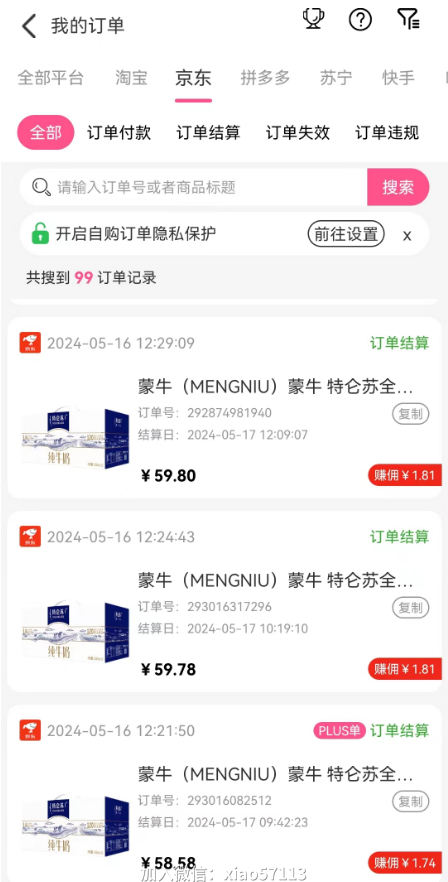
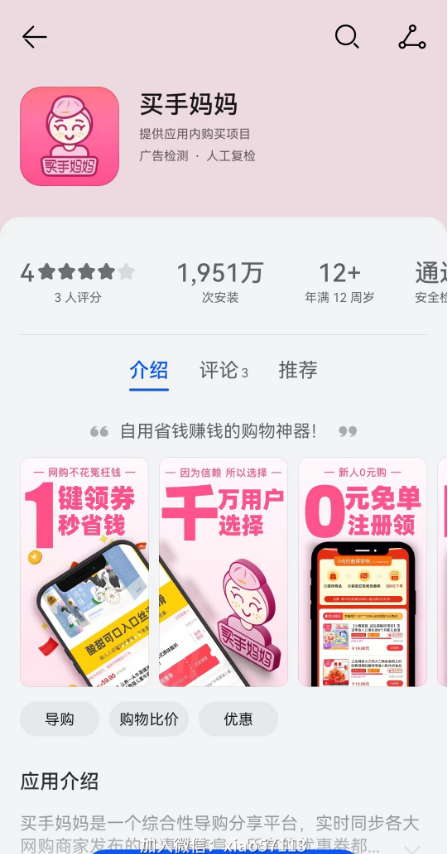
买手妈妈帮助

买手妈妈帮助

买手妈妈7625568|自用省钱分享赚钱,真实佣金记录

自用省钱很香,买手妈妈邀请码能帮你从省钱迈到赚钱吗?

很多宝妈下载买手妈妈,一开始都是冲着自用省钱去的。奶粉、纸尿裤、湿巾这些刚需品,领个隐藏券再返佣,一单省下十几块,一个月下来确实能省出一两顿饭钱。但问题来了——当你用了两三个月,省了小几百,开始琢磨”我也试试分享赚钱”的时候,突然发现:根本不知道从哪里下手。

这不是个例。同一个邀请码 7625568 进来的用户里,有人三个月后月佣金做到两三千,也有人发了两天朋友圈没动静就弃坑了。差距到底在哪?不是资源,不是运气,而是卡在了”自用→分享”这个断层上。

自用和省钱是”消费行为”,分享和赚钱是”经营行为”——这两者之间有一条大多数人看不见的鸿沟。

90%的买手妈妈邀请码用户卡在自用→分享的三个断点

断点一:买手妈妈邀请码选品散乱,不知道发什么

自用的时候,你只需要买自己需要的。但一旦要分享,你就得考虑:朋友圈的人需要什么?什么品好卖?什么品佣金高?结果就是——今天发奶粉,明天发纸巾,后天发玩具,没有任何主题线。朋友圈的人根本记不住你是干嘛的,甚至觉得你在刷屏。

断点二:买手妈妈邀请码私域信任没建起来

直接扔链接是最低效的方式。没有信任基础,你的推荐就跟广告没有区别。很多宝妈一上来就群发商品链接,结果不是被屏蔽就是被拉黑。问题不在于买手妈妈这个平台,而在于你没有做”信任前置”。

断点三:买手妈妈邀请码素材和工具不会用

买手妈妈APP里其实有商学院、关键词搜索、买手圈素材库这些功能,但80%的新手根本不知道在哪打开。自己截图、自己写文案、自己找卖点——做两天就累了。其实平台已经帮你准备好了,只是你不知道用。

买手妈妈APP界面

买手妈妈邀请码:朋友圈7天破冰排期

不需要你每天发10条,不需要你写长篇大论。每天2-3条,按下面这个节奏走,7天就能把信任感建起来。

Day 1-2:买手妈妈邀请码自用晒单,真实感先行

不发链接,不发广告。就发你真实买的东西——把买手妈妈上的订单截图发出来,配上价格对比。比如:”给宝宝囤的XX纸尿裤,旗舰店199,这里领券+返佣到手才158,省了41块。” 真实的价格对比是最有说服力的内容。

Day 3-4:买手妈妈邀请码晒佣金到账截图

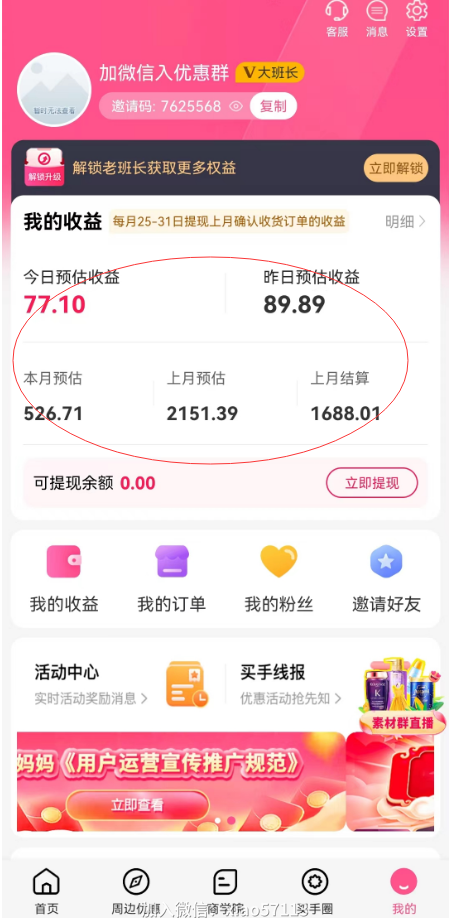
把买手妈妈后台的佣金明细截图发一张,不用打码金额,真实是多少就多少。配文:”上个月自用省了XX,顺便分享了几单给朋友,佣金到账XX,够给宝宝加两罐辅食了。” 这种内容不夸张,但非常容易引起同频宝妈的好奇。

Day 5-6:买手妈妈邀请码分享选品心得

这时候可以分享一些”我比了3个平台,这个确实便宜”的选品对比内容。比如纸尿裤怎么买更划算、奶粉囤货的最佳时机。让朋友觉得你不只是在发广告,而是真的懂育儿用品怎么买更聪明。

Day 7:买手妈妈7625568正式邀请,给一个入口

朋友圈发一条真诚的邀请:”用买手妈妈快两个月了,省了XXX,收了XXX佣金。如果你也想试试,可以填我的邀请码,应用商店搜索”买手妈妈”下载就行。我拉你进宝妈交流群,大家一起交流省钱经验。”

记住:不是让人家”跟你干”,而是”一起省”。进群之后,你再用社群慢慢引导。一个活跃的200人群,日常靠互点、分享优惠券维持热度,大促期间集中推高佣品,一个月稳定两三千佣金并不难。

买手妈妈邀请码新手最容易踩的四个坑

  • 红包冲突:用了平台签到红包,订单佣金可能归零。自用时注意区分,分享给别人的时候也提醒一下。
  • 跳转追踪丢失:领券跳转后不要在店铺里乱逛,不要点其他商品链接再回来买,很容易丢失追踪导致佣金缩水。
  • 拼多多比价无佣:拼多多订单24小时内如果系统检测到比价行为,不会结算佣金。拼多多商品建议先加购再走自己的链接。
  • 延迟到账的心理落差:买手妈妈的佣金是确认收货后次月25-30日才能提现,不是下单就到账的,提前跟朋友说清楚。

写在最后:为什么同一个买手妈妈邀请码结果差别很大?

根本原因不是平台好不好,而是有没有走对路径。买手妈妈的核心价值就是”自用省钱、分享赚钱”,但省钱是第一步,分享才是第二步。很多人在第一步停住了,不是不想迈出第二步,而是没人告诉他们怎么迈。

买手妈妈购物省钱

如果你已经下载了买手妈妈,用了邀请码注册了,却不知道下一步怎么走——不妨试试上面那套7天排期,从自用晒单开始,一步步过渡到分享。不用急,不用贪,一步步来。

还没注册的宝妈:应用商店搜索”买手妈妈”下载,注册时填写邀请码 7625568,进群一起交流省钱技巧。现在就行动起来吧。

买手妈妈帮助

广告线索质量差的真实原因,大部分投手不会告诉你

广告投放线索质量差怎么办?投手教你从表单到成交的转化优化

做了这么久投放,听到商家抱怨最多的就是一句话:”钱花了不少,线索全是无效的。”这话我太熟了,每天都能碰到。但说句实在话,线索质量差不等于投放有问题,很多时候问题出在商家自己都没意识到的环节上。

线索质量差,先别急着怪投放

我接触过不少商家,一看到线索转化率低,第一反应就是”投放不行””换个投手试试”。但在我经手的案例里,真正因为投放策略导致线索质量差的,占比不到三成。剩下七成的问题,基本都出在转化漏斗的其他环节。

什么意思呢?广告投放负责的是”把人引过来”,但”引过来之后发生什么”,才是决定线索质量的关键。你可以把整个过程拆成三段来看:

  • 投放端:人群定向、出价策略、素材内容——决定谁来
  • 承接端:落地页设计、表单字段、咨询入口——决定谁留
  • 跟进端:响应速度、话术质量、跟进节奏——决定谁成交

大部分商家只盯着投放端看,却忽略了后面两个环节。我见过一个做教育培训的商家,聚光投放的点击率和表单提交率都不错,但成交率不到2%。后来帮他梳理了一遍,发现落地页上的表单要填7个字段,电话号码还是必填项。你想想,一个刷小红书的用户,看到这么复杂的表单,要么直接关掉,要么随便填个假号码应付。这种线索,质量能好才怪。

表单设计:线索质量的第一道关卡

表单是线索进入你系统的第一个入口,这个环节如果设计不好,后面再怎么优化都白搭。我总结了几个常见的表单设计误区:

字段太多。很多商家恨不得把用户的所有信息都拿到手,姓名、电话、公司、预算、需求描述……一上来就摆六七个字段。实际上,表单每多一个字段,提交率就掉一大截。我的建议是,首层表单控制在2-3个核心字段,比如”联系方式+需求类型”就够了。更详细的信息,等销售跟进的时候再去补充。

必填项设置不合理。电话号码作为必填项这个问题特别普遍。2026年了,很多用户对留电话有很强的抵触心理,尤其是小红书的用户群体,以年轻女性为主,她们更愿意通过私信沟通。如果你的业务允许,把”私信咨询”作为首选触达方式,电话作为可选项,线索量和质量都会有明显提升。

落地页和广告内容脱节。用户点进落地页,发现内容和广告里看到的不一样,信任感瞬间就没了。比如广告说的是”免费领取报价方案”,落地页一进去就是”立即购买”,这种体验断裂直接导致用户流失或者提交假信息。

跟进速度决定了线索能不能变成客户

这个事情我说过很多次,但还是有很多商家做不到:线索进来之后,5分钟内联系和2小时后联系,转化率差距是5倍以上。这不是夸张,是真实的数据反馈。

我之前帮一个做本地生活服务的商家优化过聚光投放,投放策略没怎么动,就改了两件事:一是简化了表单,从5个字段减到2个;二是要求销售在线索进来后10分钟内必须完成首次触达。就这两步,一个月后线索成交率从3%涨到了11%,广告ROI直接翻了一倍多。

跟进这块还有一个容易被忽略的点:很多商家的销售拿到线索后,就按标准话术一套打过去,完全不看线索来源和用户填写的需求信息。聚光投放的线索和自然进来的咨询不一样,这些用户是被你的广告内容”种草”之后来的,他们脑子里已经有了一个预期。你的跟进话术应该和广告内容保持一致,让用户感觉”这就是我刚才看到的那个人/那家店”,而不是突然换了一个画风。

投放端能做什么来提升线索质量

说完承接和跟进,再回到投放端。虽然大部分线索质量问题不在投放,但投放端确实有一些操作可以直接影响线索质量。

素材筛选。不是所有跑量好的素材都能带来高质量线索。有些素材标题很吸睛,点击率很高,但吸引来的全是”薅羊毛”的用户。你需要定期分析不同素材带来的线索转化数据,把那些”高点击低转化”的素材关掉,把预算集中到转化效率高的素材上。

人群包优化。聚光平台现在支持自定义人群包,你可以把已经成交的客户数据回传给平台,让算法去学习”什么样的人更容易成交”,而不是只学习”什么样的人更容易点击”。这个操作在2026年的聚光后台已经很好用了,API回传对接也不复杂。

出价策略调整。如果你的目标是线索质量而不是线索数量,可以考虑把出价方式从CPC改成oCPX,让平台帮你优化转化目标。虽然前期可能跑得慢一些,但后期稳定之后,线索质量会明显好于CPC跑出来的量。

说两句

线索质量差这个问题,没有一刀切的解决方案。但有一个排查思路可以参考:先看表单设计是否合理,再看跟进速度和话术是否到位,然后再回到投放端去优化定向和素材。按这个顺序排查,大部分问题都能找到原因。

如果你正在跑聚光或者其他平台的投放,遇到线索质量方面的问题,可以来找我聊聊,微信搜 xiao57113,我平时也在帮不少商家做投放优化,实战中遇到的问题基本都踩过。不一定能帮你直接解决问题,但至少能帮你少走一些弯路。

买手妈妈帮助

小红书聚光全链路归因方案:广告主最头疼的追踪难题怎么解

流量越来越贵,广告越来越「卷」——你的钱花对了吗?

近两年做投放的同行有一个共同的感受:同样的预算,能买到的精准流量越来越少。平台算法越来越复杂,用户对广告的免疫越来越高,一条精心制作的小红书笔记可能曝光不到三位数。

问题出在哪里?很多品牌还在用「拍电影」的思路做广告——花几周打磨一支素材,期待它像TVC一样被反复播放。但在小红书聚光平台上,内容的生产逻辑已经彻底变了。

RGC时代:广告从「单向发布」变成「交互界面」

过去品牌把广告当成「作品」,追求创意、质感、完播率。但今天用户的注意力被分割到极致——一条笔记的生命周期可能只有几小时。真正有效的广告,是对用户当下意图的实时回应。

这就是RGC(实时生成内容)的核心逻辑:搜索意图、情绪状态、场景位置都是触发信号。用户搜「油皮面霜」时,你推控油测评;用户深夜刷到「失眠怎么办」,你推助眠好物。内容不再是一锤子买卖,而是一次次「接电话」式的精准沟通。

小红书聚光投放的底层逻辑恰恰与此吻合。它的搜索广告以用户主动搜索意图为基础,信息流广告以兴趣标签为锚点——本质上都在「接住」用户已经发出的信号,而不是强行塞给他们一个信号。

聚光投放的两个核心引擎

搜索广告:拦截决策最后一环

小红书搜索广告的本质是「关键词即需求」。当用户主动搜索「精华液推荐」「去痘印产品」时,她的购买意向已经非常明确。聚光的搜索广告可以精准卡位这些高意向词,让品牌出现在决策的最后一环。

实际操作中,建议把预算聚焦在长尾词和场景词上。大词如「精华液」竞争激烈、点击成本高,但「敏感肌修护精华」「熬夜急救精华」这类场景词反而转化更好。配合搜索词报告定期否定无效匹配,能把投放成本控制在更健康的范围。

信息流广告:用「活人感」打破信任壁垒

用户对品牌官方内容越来越警惕,但对「真实使用体验」天然信任。我们在大量投放案例中观察到,素人感的实拍图、带使用痕迹的真实测评、带有情绪张力的标题,点击率明显高于精致商业大片。

这背后是用户决策路径的变化:从KOL种草→购买,变成了KOL曝光→KOC验证→下单。消费者会主动搜索多个真实用户的反馈来交叉验证,再做出购买决定。信息流素材的「活人感」越强,这条验证链就越短。有经验的投放团队还会把小红书流量与微信生态打通——在评论区做好引导,让高意向用户进入私域,再通过微信做二次触达和复购转化。

聚光投放最烧钱的三个误区

误区一:出价越高流量越好

很多人以为出价高就能拿好流量,但聚光的eCPM排序机制中,点击率和转化率同样重要。一张点击率低的笔记出价再高,也打不过优质素材。优化素材质量比堆高出价更有效。

误区二:盲目追求ROI,忽略漏斗宽度

如果只盯着成交数据砍预算,会导致漏斗越来越窄。合理的做法是设置两部分预算:一部分用于收割高意向人群转化,一部分用于种草兴趣人群蓄水,保证后续有持续的新流量进来。

误区三:一条素材跑到底

聚光平台对素材有自然衰减机制。一条笔记的流量高峰通常只有几天。建议每周定时更新新素材,同时用A/B测试快速筛选出点击率最高的方向,把预算集中到获胜素材上。

如何判断你的投放策略需要调整

如果你遇到以下情况,说明投放策略可能需要重新梳理:

  • 花费上涨但转化没跟涨
  • 点击率持续低于行业均值
  • 搜索词报告中出现大量无关词
  • 同一素材在不同时间段的成本波动过大

这些问题的背后往往不是单一的出价问题,而是从关键词策略、素材方向到人群定向的系统性偏差。如果自己拿不准,直接在微信上把账户截图发给我,帮你快速过一遍。

相比抖音投流的「大水漫灌」逻辑,小红书聚光更讲究「精准滴灌」。两个平台的底层算法逻辑不同,用抖音的打法做小红书,往往会多花不少冤枉钱。

写在后面

广告投放早已不是「砸钱就行」的粗放时代。RGC逻辑下,每一分预算都应该精准回应一个具体的用户需求。聚光平台的优势在于它天然离「用户意图」最近——搜什么、看什么、点赞什么,都是信号。

如果你正在做小红书投放,或者在投放中遇到成本高、转化低的问题,我可以帮你做一次免费的投放诊断,一起看看账户数据,找到问题到底出在哪个环节。

添加微信 xiao57113,备注「聚光诊断」,加微信后我会根据你的账户情况给一份针对性建议。

买手妈妈帮助

Personality-Based Career Matching: A Data-Driven Approach

Find Your Perfect Career Path Based on Your Personality Type

You walk into a store for dish soap and walk out with a candle, a throw blanket, and a sudden need to reorganize your closet by color. That small detour was written into your personality long before you ever swiped a card — and the same logic applies to the career moves you make.

Consumer psychology has quietly built a case that personality traits predict spending behavior more accurately than income, age, or brand loyalty metrics. A growing body of research shows that the same patterns govern your job satisfaction, your communication style, and even your stress responses at work. Understanding how your personality drives your decisions — from the checkout line to the corner office — is one of the most practical investments you can make in yourself.

Why Your Enneagram Type Predicts Your Cart Better Than Your Paycheck

Demographic targeting tells brands who you are on paper. Personality frameworks tell them why you choose what you do — and that difference is everything when it comes to both spending and career fit.

The Enneagram has gained traction in marketing departments for one reason: it focuses on core motivations. Type 4s (the Individualist) don’t buy vintage furniture because of their tax bracket — they buy it because it expresses identity, and they thrive in careers that allow creative self-expression. Type 6s (the Loyalist) stick with the same insurance provider for a decade, not because they’ve comparison-shopped, but because consistency reduces anxiety — and they flourish in workplaces with clear expectations and strong support systems. Type 7s (the Enthusiast) fill their carts with variety because options feel like freedom, yet they often struggle in rigid, repetitive roles.

Your income level says almost nothing about which specific brands you’ll choose or which career path will satisfy you. Your personality does.

The Big Five in the Aisle and in the Office

The Big Five (OCEAN) model offers a more granular view of how personality shapes behavior across life domains. You can take free Big Five and Enneagram assessments at personalitree.com that map your personality to your choices with no upselling.

From Self-Awareness to Direction

Personality frameworks are not cages — they are maps. A map only helps when you know where you are standing. The research is consistent: people who understand their own traits make better decisions about spending, relationships, and careers because they stop fighting their natural wiring and start working with it.

Take twenty minutes to discover what your personality says about your blind spots and your strengths at personalitree.com.

买手妈妈帮助

抖音本地推 vs 小红书聚光:同一预算下哪个更划算

聚光投放ROI从0.3到2.5,我只改了这三个设置

上个月帮一个做家居用品的商家复盘账户,他跟我说投了三个月聚光,ROI一直在0.3左右徘徊,最多的时候一天烧了两千多块,成交不到十单。他准备放弃了,觉得聚光不适合他的品类。

我看了他的后台数据,发现问题根本不在品类,而在三个最基础的设置上。调完之后第二周,ROI直接拉到2.5,私信成本从340降到78。今天把这个案例完整复盘一下,希望能帮到有类似困惑的朋友。

问题一:出价方式选错了,钱越烧越慌

他一开始用的是手动出价,每条私信开口出价设了80块。理由很简单:”我怕系统乱花我的钱,自己设个上限心里踏实。”

这个想法听起来合理,实际上是大坑。手动出价在聚光里有个致命问题:你对这个行业的真实出价水位没有概念,设高了浪费预算,设低了计划跑不动。他设的80块,在当时的竞争环境下其实偏低,系统觉得”这个人不愿意出钱”,干脆不给他流量了。

我让他切到自动出价,目标成本设成”私信开口成本不超过120″,让系统自己去竞价。同时把预算从每天500提到800,给系统足够的学习空间。结果三天后,实际私信成本稳定在95左右,计划开始正常跑量了。

这里的关键认知是:自动出价不是”让系统随便花”,而是”告诉系统你的底线,让它在底线之内尽量多拿量”。手动出价适合有经验的投手,新手用自动出价反而更稳。

问题二:定向叠了太多层,把真正的客户筛掉了

他的定向设置是这样的:年龄25-40岁、一二线城市、女性、对家居/生活方式/品质生活有兴趣、消费能力中高。看起来挺精准对吧?

但问题是,这几层条件叠完之后,系统能覆盖的人群已经很少了。更麻烦的是,”消费能力中高”这个标签在聚光里的准确率并没有想象中高,很多真实购买力强的用户可能没被贴上这个标签,反而被筛掉了。

我让他只保留两个条件:女性、对家居/生活方式有兴趣。年龄放宽到22-45岁,城市不限。结果人群池子扩大了将近四倍,计划从”跑不动”变成了”跑得动”。

很多人做定向有个误区,觉得条件越多越精准。实际上,聚光的算法比你更懂用户。你给系统一个大致方向,让它在海量数据里去找转化概率高的人,效果往往比你自己层层筛选要好。定向的作用是指引方向,不是替算法做决定。

问题三:素材只准备了三套,审美疲劳来得太快

他三个月就用了三套素材,一套产品图、一套场景图、一套用户好评截图。前期数据还行,但跑了两周之后点击率从4.2%掉到1.8%,成本越来越高。

这是典型的素材疲劳。同一批素材反复曝光给同一批人,看腻了就不会点了。聚光的算法也会判断”这个素材的新鲜度”,老素材的权重会逐渐降低。

我让他一周内上新了八套素材,类型包括:真人出镜讲产品、用户使用前后的对比、工厂/仓库实拍、限时优惠倒计时、问答形式解决痛点。上新之后点击率回升到3.5%以上,计划重新活了过来。

素材更新频率我建议至少每周两套新素材,预算大的账户要更频繁。不要觉得做素材麻烦,素材就是聚光的弹药,弹药不足,再好的枪也打不准。

三个改动背后的共同逻辑

复盘这个案例,三个问题看似独立,其实指向同一个核心:很多投手在用”控制”的思路做投放,想靠手动设置把每一个环节都捏在手里。但聚光是一个算法驱动的平台,你越控制,系统越放不开手脚。

正确的思路是”给方向、给底线、给空间”:告诉系统你的目标是什么,设置好成本上限,然后让系统去试错和优化。投放前期要容忍一定的”浪费”,那是算法在学习。学习期过了,数据会稳定下来。

这个商家的账户调完之后,现在每天稳定消耗800-1200块,ROI维持在2.2-2.8之间,私信转化率从2.1%提升到6.7%。三个月前他想放弃聚光,现在准备把预算再翻倍。

给新手投手的几个建议

  • 自动出价+成本控制是新手最稳妥的组合,不要一上来就手动出价
  • 定向从宽开始,跑出一批转化数据后再根据用户画像收紧
  • 素材更新频率决定账户寿命,每周至少两套新素材是底线
  • 给计划至少3-5天的学习期,不要今天开明天关,系统来不及优化
  • 每天看数据但不要每天大调,微调可以,大改会重置学习进度

做聚光投放这些年,我见过太多账户不是死在”技术”上,而是死在”太着急”上。投了三天没效果就关计划、换素材、改定向,结果永远在学习期里打转。算法需要时间来理解你的产品和用户,你也需要时间来理解算法的逻辑。

如果你在跑聚光的过程中遇到瓶颈,想找人聊聊思路,可以加我微信 xiao57113,发一下你的后台截图,我帮你看看到底卡在哪一步。不收费,就当交个朋友,投手之间互相交流。

投放这件事,说到底就是不断试错、不断迭代。没有万能的方案,只有适合自己的打法。希望这篇复盘对你有启发。

买手妈妈帮助

买手妈妈怎么赚钱?邀请码7625568推广佣金详解

买手妈妈邀请码7625568|宝妈自用省钱分享赚钱全攻略

带娃三年,花钱如流水。从奶粉纸尿裤到辅食玩具,每个月账单翻出来自己都吓一跳。最近发现身边不少宝妈在用一款叫买手妈妈的APP,说是买东西不仅能领隐藏优惠券,还能拿到返利。这东西到底靠不靠谱?今天拿纸尿裤做了一组对照实验,用实际数据说话。

买手妈妈邀请码”穷鬼套餐”实测对比

选同一款XX品牌纸尿裤(L码60片装),分别在三种情境下模拟下单:

  • 普通下单:直接在电商平台购买,原价139元,店铺券减10元,到手129元,零返利。
  • 叠加红包下单:领了平台满减红包后下单,到手119元,但因为红包抵扣,佣金归零,实际等于119元无返利。
  • 通过买手妈妈下单:先领买手妈妈内隐藏优惠券30元,再叠加平台红包,最终到手89元,确认收货后还能拿到返利6.5元,实际花费82.5元

同一款纸尿裤,普通下单129元,买手妈妈下单82.5元,一箱省了46.5元。一个月用4箱的话,光纸尿裤就能省将近200块。这就是”穷鬼套餐”时代的真实写照——不是不消费,而是花更少的钱过同样的生活。返利平台之所以比纯优惠券活得更好,正是因为当各大平台对优惠券越来越”免疫”时,返利在底层结算环节依然有效。

买手妈妈省钱实测对比

买手妈妈邀请码下载注册全流程

操作门槛比想象中低得多,主要分三步。

第一步:买手妈妈APP下载与邀请码准备

在手机自带的应用商店中搜索“买手妈妈”,找到官方应用后点击下载安装。务必走应用商店渠道,安全有保障。

第二步:买手妈妈注册与邀请码填写

安装完成后打开APP,选择手机号注册。在注册页面会有一个邀请码栏,填写邀请码 7625568。这一步决定了后续能否获得团队支持和导师带教,包括怎么看返利比例、怎么组合优惠券才能佣金最大化。

第三步:买手妈妈邀请码自用省钱玩法

注册完成后,在买手妈妈里搜索你想买的商品,会显示隐藏优惠券和返利金额。复制链接到淘宝/京东/拼多多下单,确认收货后返利到账。自用省钱、分享赚钱——自己买省一笔,分享给朋友还能赚佣金。

买手妈妈邀请码使用避坑指南

实际用了几个月,总结几个新手最容易踩的坑:

  • 跳转后别乱逛:复制链接跳转到电商平台后,尽量直接下单,不要在平台内浏览其他商品,否则可能导致追踪失效、返利丢失。
  • 红包可能吃掉佣金:叠加平台大额红包时,系统会优先抵扣掉佣金部分。返利金额偏低时,检查一下有没有叠加红包。
  • 结算周期别着急:返利需要等确认收货后,次月25-30日才能提现。周期比较长,属于正常情况,耐心等着就好。
  • 拼多多24小时比价:拼多多的返利有24小时比价机制,如果下单后价格变化,返利可能会调整,建议下单后不要频繁取消重下。

自用省钱、分享赚钱——这是买手妈妈的核心价值。如果你身边也有宝妈朋友,把好物链接分享给她,你也能获得一份分享佣金。不想折腾推广的话,只自用省钱也完全没问题。

写在最后|买手妈妈邀请码”穷鬼套餐”时代

以前领优惠券靠运气,现在用买手妈妈让每一单都清清楚楚——优惠券+返利,能省的绝不浪费。优惠券免疫的时代,返利平台作为更底层的消费基础设施,反而越活越好。

我建了一个宝妈交流群,群里会分享各大平台的优惠信息和商品测评。如果你也想加入,下载买手妈妈后填写邀请码7625568,然后私信我拉你进群。群里很多有经验的宝妈会教你怎样组合优惠最划算。

其实自用省钱也好,分享赚钱也好,核心就是让自己花的每一分钱都值得。现在就去应用商店下载买手妈妈,输入邀请码开始你的省钱之旅吧。

买手妈妈帮助

预算砍半后,我用聚光把ROI从1:2拉到1:5,这3个调整是关键

当7000个圈层在说不同方言,你的广告在跟谁对话?

过去做广告投放,核心逻辑是把用户装进”18-35岁女性”这类粗颗粒度的标签里,一套素材反复触达。如今这套方法论正在被市场淘汰。小红书平台上沉淀出超过7000个细分文化圈层,每个圈层有自己的语言体系、消费动机和价值判断。品牌如果还用同一套素材打所有人,本质上是在7000个平行宇宙里讲同一种方言——你以为是精准投放,实际在自说自话。

行业报告显示,超40%的广告主无法精准衡量ROI,无效流量占比超过21%。预算紧缩的背景下,”花小钱办大事”不再是一句口号,而是生存刚需。和一个同行聊投放策略调整,他在微信上分享了聚光的最新数据——真正跑通的人,已经把目光从抖音转向了小红书聚光平台,不是放弃巨量,而是学会了在不同战场用不同打法。

为什么聚光能让你用一半预算跑出双倍ROI?

小红书聚光的核心差异在于:它不问你”是谁”,而是问你”为什么买”。传统巨量引擎基于人群画像做流量分发,聚光则围绕搜索意图和笔记内容匹配用户。同一个用户在刷娱乐内容时和主动搜索攻略时,商业价值完全不同。

一个护肤品牌的实际案例:在巨量上投放女性护肤素材,单次转化成本约42元。同样的预算切到聚光,锁定”敏感肌修护面霜””油痘肌精华”等高意向搜索词,配合真实使用体验的笔记内容,转化成本降到19元,ROI直接翻倍。核心变化不是素材变好了,而是流量匹配逻辑变了——从”找到对的人”变成了”找到对的场景”。AI搜索广告同比增长108%,成为广告投放中增长最快的增量渠道。用户在聚光上的搜索行为就是购买信号,抓住这个信号就能用更少的预算撬动更高的转化。

预算减半效果翻倍的聚光投放三步法

基于我们服务品牌的实际操盘经验,这套方法已经帮多个客户用50%预算实现ROI翻倍。

第一步:用搜索词重新定义目标人群

放弃传统的性别、年龄标签,从聚光后台拉取搜索词报告,找出用户实际在搜什么。一款母婴产品不要投放”妈妈必买”这种泛内容,而是锁定”3岁宝宝过敏性湿疹””宝宝换季皮肤护理”等具体场景词。匹配的流量虽然更窄,但转化率高出3倍以上。

第二步:用RGC内容承接搜索意图

RGC(实时生成内容)是近两年投放领域最值得关注的趋势。内容不再是精心制作的”作品”,而是对用户搜索意图的实时”反应”。根据聚光关键词反推笔记方向,每周产出5-10篇针对性内容,覆盖不同圈层的表达习惯。一篇针对”成分党”的笔记和一篇针对”敏感肌急救”的笔记,看似是同一个产品,但语言体系、配图风格、强调卖点完全不同。

第三步:高频迭代剔除无效流量

聚光后台支持精细到关键词级别的数据追踪。设定48小时淘汰机制——给计划窗口期观察点击率和转化率,不达标的词立刻暂停,把预算集中到跑通的词上。同时排除21%以上的无效流量,这是一笔可观的节省。

这套流程上手有一定门槛,很多团队卡在选词和内容方向判断上。如果你正在调整投放策略却拿不准方向,可以添加微信获取一次免费的投放诊断,我们帮你梳理账户结构和关键词方向。

大部分团队踩过的三个坑

坑一:把巨量的素材直接搬运到聚光

两个平台的用户意图天差地别。抖音是”杀时间”的娱乐场,素材需要强视觉冲击和快节奏;小红书是”省时间”的决策场,内容需要真实感和信息增量。同一套素材在两个平台跑,结果往往是一边有效一边崩盘。

坑二:只看点击率忽略搜索覆盖率

很多投放手盯着点击率优化,忽略了品牌在搜索结果中的”可见度”。社交内容正在被AI算法重新分发,品牌需要管理自己在AI回答中的露出频率。如果在聚光搜索结果里搜不到你的笔记,再高的点击率也没有转化基础。

坑三:用品牌广告的逻辑做效果投放

聚光本质是效果广告链路,每一分钱都要对应可量化的转化。用”先曝光后转化”的心态去做,预算很容易被吃干抹净还不明不白。定期通过微信沟通账户数据、做周度复盘,才能及时纠偏——这是我们从上百个账户中总结出的关键经验。

结语:投放的终点不是曝光,是对话

当用户圈层粉尘化到极致,广告主面临的核心挑战不是”触达不到”,而是”触达了但没被理解”。小红书聚光的价值在于,它逼着品牌先理解用户的具体意图,再去匹配内容和预算。这种”意图优先”的投放逻辑,本身就是一种成本优化。

如果你正在优化聚光投放却发现ROI迟迟起不来,欢迎添加微信 xiao57113,我们会从账户结构、关键词布局、内容方向三个维度帮你做一次免费深度诊断,找到预算真正的漏点。

买手妈妈帮助

The Best Career Paths Based on Your Personality Type

The Algorithm Knows You Better Than Your Best Friend Does

Every click, every pause, every like feeds a machine that builds a profile of who you are. The global psychometric testing market recently passed $6 billion, but the real story is what happens when AI starts profiling you without your consent or even your awareness. Researchers at Frontiers published findings showing that your personality type can predict whether you will uncritically accept AI-generated answers or push back with skepticism. As generative AI companions reshape how people form emotional bonds, the question isn’t whether the algorithm knows you — it is whether you know yourself. Personalitree.com offers free Big Five and 16-type assessments that give you a structured starting point. Knowing your scores on each dimension turns vague self-help advice into targeted action.

How to Use Your Personality Profile Without Getting Manipulated

The goal is not to change everything about yourself. The goal is to build self-awareness so you can recognize when a platform, a tool, or an AI is exploiting your traits. Here is a practical approach:

  • Take a structured assessment. The site provides the OCEAN model assessment along with type-based frameworks so you can compare different lenses on the same data.
  • Identify your AI vulnerability. High Agreeableness combined with high Neuroticism makes you the most susceptible to forming emotional dependence on AI companions. Low Openness plus low Conscientiousness makes you most likely to accept AI outputs uncritically. Name your pattern so you can watch for it.
  • Design your environment, not your willpower. Trying to brute-force a personality change through discipline alone is exactly why the self-help industry fails. Instead, restructure your digital environment — turn off algorithmic feeds, schedule deliberate offline time, and use AI as a tool you control rather than a feed that controls you.
  • Track over time. Personality does change, but it changes slowly and requires repeated intentional behavior. Retest every six months to see whether your scores shift in the direction you want.

Frequently Asked Questions

Can AI really predict my personality better than I can?

Several studies show that machine learning models trained on digital footprints — social media activity, purchase history, browsing patterns — can predict Big Five scores with accuracy comparable to or exceeding human judgment. The edge the algorithm has is objectivity. You have biases about yourself. The algorithm does not. But the algorithm also lacks context, relationship awareness, and the ability to account for your conscious growth.

Is personality change actually possible?

Yes. The old view that personality crystallizes by age 30 is no longer supported by the data. A landmark study found that intentional change can occur in as little as 20 weeks when the right conditions are met — clear goals, behavioral repetition, and environmental support. The caveat is that commercial self-help products, on average, produce zero measurable change. Structured, science-based approaches work; shopping does not.

Which Big Five trait matters most for career success?

Conscientiousness is the single strongest predictor across virtually all occupations. Openness predicts creative achievement. Extraversion predicts success in sales and leadership roles. Neuroticism is the strongest negative predictor — high scores correlate with burnout, turnover, and lower performance under pressure. But context matters more than any single trait; a mismatch between your personality and your work environment is more damaging than any one score.

Take the Next Step

Understanding your personality is not about fitting yourself into a box. It is about knowing your default settings so you can decide which ones to keep and which ones to override. The algorithm is already reading you. The only defense is to read yourself first. Take a free Big Five assessment, explore your profile, and start building the self-awareness that no AI can take from you.

买手妈妈帮助

Do Opposites Really Attract? What Personality Research Tells Us About Relationships

When two people meet and fall in love, they rarely stop to wonder whether their personality traits are statistically compatible. They focus on shared interests, physical chemistry, and the ease of conversation. Yet decades of relationship research suggest that personality — particularly the Big Five dimensions of Openness, Conscientiousness, Extraversion, Agreeableness, and Neuroticism — plays a quiet but persistent role in determining whether a relationship thrives or unravels over time.

The idea that personality shapes romantic outcomes is not new, but the quality of the evidence has improved dramatically. Early studies relied on small samples and self-selected couples. Modern research draws on large-scale longitudinal datasets, meta-analyses spanning dozens of countries, and dyadic modeling that accounts for both partners’ traits simultaneously. The picture that emerges is more nuanced than “opposites attract” or “similarity breeds contentment” — and far more useful for anyone who wants to understand their own relationship patterns.

What the Big Five Tells Us About Partner Selection

The Big Five model measures personality on five continuous dimensions rather than sorting people into discrete categories. This dimensional approach matters for relationship research because it captures gradations. You are not simply agreeable or disagreeable — you fall somewhere on a spectrum, and the same is true for your partner. The interaction between two people’s positions on these spectrums creates the unique dynamic of every relationship.

Assortative mating — the tendency for people to partner with others who resemble them — has been documented across all Big Five traits, but the effect sizes vary. A 2017 meta-analysis published in Nature Human Behaviour examined data from over 80,000 couples and found that partners showed the strongest similarity on Openness to Experience and Conscientiousness, followed by Extraversion and Agreeableness. Neuroticism showed the weakest spousal correlation. In practical terms, you are more likely to share political views and intellectual interests with your partner than to share the same baseline level of anxiety.

What makes this finding interesting is that similarity on Openness and Conscientiousness may reflect active selection rather than passive drift. People high in Openness seek out partners who share their curiosity about art, travel, and ideas — these values are visibly expressed early in dating. Conscientious people gravitate toward others who demonstrate reliability and ambition, qualities that are also observable during courtship. Neuroticism, by contrast, is often concealed or managed during early dating stages, which may explain why partners converge less on this trait.

If you want to understand your own personality profile before thinking about compatibility, platforms like personalitree.com offer free Big Five and 16-type assessments. Knowing where you stand on each dimension is the first step toward recognizing patterns in your relationship history.

Neuroticism: The Trait That Most Strongly Predicts Relationship Outcomes

If you had to pick a single Big Five trait that most reliably forecasts relationship satisfaction and stability, Neuroticism would be the answer. A 2020 meta-analysis in the Journal of Personality and Social Psychology, aggregating data from over 17,000 individuals across 39 studies, found that Neuroticism was the strongest personality predictor of relationship dissatisfaction — stronger than attachment style, communication quality, or conflict frequency. The effect held across gender, relationship duration, and cultural context.

Why does Neuroticism matter so much? The mechanism appears to operate through multiple channels. People high in Neuroticism experience more frequent negative emotions — anxiety, irritability, sadness — and they are more likely to interpret ambiguous partner behavior as hostile or rejecting. A partner who forgets to reply to a text message is not simply busy; they are losing interest. A disagreement about weekend plans is not a logistical problem; it is a sign of fundamental incompatibility. This negativity bias, repeated hundreds of times over months and years, erodes relationship satisfaction for both partners.

There is also a behavioral component. High-Neuroticism individuals tend to engage in more conflict-escalating behaviors — criticism, defensiveness, withdrawal — and fewer relationship-maintenance behaviors like expressing appreciation or offering emotional support. The partner of a high-Neuroticism individual often reports feeling like they are walking on eggshells, never sure what will trigger the next emotional spiral.

Importantly, Neuroticism is not a fixed sentence. Research on personality change shows that Neuroticism tends to decline naturally with age, and interventions like cognitive-behavioral therapy and mindfulness training can accelerate this decline. Couples therapy that addresses emotional regulation directly — rather than focusing solely on communication skills — often produces better outcomes when one or both partners score high on this trait.

Agreeableness and Conscientiousness: The Relationship Maintenance Team

While Neuroticism predicts what can go wrong, Agreeableness and Conscientiousness predict what goes right. These two traits function as the relationship’s maintenance system — Agreeableness handles the emotional climate, and Conscientiousness handles the structural foundation.

Agreeable people are warm, cooperative, and motivated to maintain harmony. In relationships, this translates into more frequent expressions of affection, greater willingness to compromise during disagreements, and a lower threshold for forgiving minor transgressions. Research using daily diary methods — where couples report on their interactions each evening — shows that agreeableness in either partner predicts fewer conflicts and faster recovery after conflicts do occur. The effect is particularly strong when both partners are high in Agreeableness, creating a positive feedback loop where each person’s warmth reinforces the other’s.

There is a known downside to extreme Agreeableness, however. Highly agreeable individuals sometimes suppress their own needs to avoid conflict, leading to a buildup of unexpressed resentment. This pattern — called “accommodation without resolution” in the clinical literature — can produce superficially calm relationships that collapse suddenly when the accumulated frustration reaches a breaking point. The healthiest dynamic appears to be moderate-to-high Agreeableness paired with assertiveness: the ability to be warm without being a doormat.

Conscientiousness contributes to relationship stability through a different mechanism: reliability. Conscientious people follow through on commitments, manage shared responsibilities effectively, and think ahead about potential problems. These behaviors may seem mundane — remembering to pay bills on time, keeping the shared calendar updated, planning for major expenses — but they prevent the slow accumulation of small frustrations that researchers call “daily hassles.” A 2018 study in the Journal of Family Psychology found that conscientiousness in either partner predicted lower levels of relationship conflict over a two-year period, mediated by more equitable division of household labor and better financial management.

Conscientiousness also appears to protect against infidelity. Multiple studies have found that conscientious individuals report lower rates of extradyadic involvement, possibly because they are more future-oriented, more concerned with the consequences of their actions, and more invested in maintaining their commitments. This is not to say that conscientious people never cheat — situational factors and relationship quality matter enormously — but the trait appears to function as a modest protective factor.

Extraversion and Openness: The Spark and the Growth

Extraversion and Openness play different roles in relationships than the traits discussed above. They are less about stability and more about vitality — the energy, novelty, and stimulation that keep relationships from becoming stagnant.

Extraversion influences relationship satisfaction primarily through social engagement. Extraverts tend to build larger social networks, initiate more shared activities, and express positive emotions more freely. All of these behaviors contribute to relationship satisfaction in the early stages of dating. However, mismatches on Extraversion can create friction over time. The classic pattern is the extravert who wants to socialize every weekend paired with the introvert who needs quiet recovery time. Neither preference is wrong, but the mismatch requires negotiation. Research on this dynamic suggests that the key is not similarity but explicit communication about expectations. Couples who discuss their different social needs openly — rather than interpreting the difference as rejection or clinginess — report higher satisfaction regardless of how similar or different their Extraversion scores actually are.

Openness to Experience influences relationships through shared exploration. Partners high in Openness tend to seek out novel experiences together — travel, cultural events, intellectual discussions — and these shared adventures create what psychologists call “self-expansion,” the feeling that the relationship is helping you grow as a person. Self-expansion is one of the strongest predictors of long-term relationship satisfaction, independent of initial compatibility. Couples who continue to learn and explore together report higher passion and commitment even decades into their relationships.

Differences in Openness can be more challenging than differences in Extraversion because they often reflect deeper value differences. A partner high in Openness may crave intellectual stimulation and unconventional experiences, while a partner low in Openness may prefer routine, tradition, and predictability. These differences can surface in everything from vacation planning to political discussions to parenting philosophies. The research suggests that Openness dissimilarity is one of the few trait mismatches that consistently predicts lower relationship satisfaction — possibly because it touches on core values that are difficult to compromise without feeling inauthentic.

Beyond the Big Five: What 16 Personalities Adds to the Picture

The 16 Personalities framework, rooted in the Myers-Briggs Type Indicator, offers a different lens on relationships. Rather than measuring traits on continuous dimensions, it sorts people into 16 types based on four dichotomies: Extraversion-Introversion, Sensing-Intuition, Thinking-Feeling, and Judging-Perceiving. The modern version also adds a fifth dimension — Assertive versus Turbulent — which maps loosely onto the Big Five’s Neuroticism.

The 16 Personalities model has well-documented scientific limitations. The binary categories impose cutoffs on continuous distributions, and test-retest reliability for type classification is lower than what most researchers consider acceptable. That said, the framework remains popular in relationship discussions because it provides accessible language for describing interpersonal dynamics. When a Thinking type says “I process problems logically before I process them emotionally,” and a Feeling type says “I need emotional validation before I can discuss solutions,” they are describing a real and consequential difference in communication style — even if the labels themselves are imperfect.

Some patterns from the 16-type framework align with Big Five research. Thinking-Feeling differences map onto Agreeableness variations, and Judging-Perceiving differences map onto Conscientiousness. The Sensing-Intuition divide maps onto Openness to Experience in ways that echo the relationship research — intuitive types tend to prioritize intellectual compatibility and shared vision, while sensing types prioritize practical compatibility and shared routines.

If you are curious about how your own type might influence your relationship patterns, personalitree.com provides assessments based on both the Big Five and the 16 Personalities model, giving you a more complete picture than either framework alone.

What the Research Cannot Tell You

Personality research offers statistical patterns, not individual destinies. The correlations between traits and relationship outcomes are real but modest — typically in the 0.10 to 0.30 range. This means that while personality matters, it accounts for a relatively small portion of the total variance in relationship satisfaction. Other factors — communication skills, shared values, life circumstances, external stress, and sheer luck — all play substantial roles.

There is also evidence that personality compatibility is not static. Longitudinal studies show that partners’ personalities can converge over time, a phenomenon called “personality convergence” or “the Michelangelo effect,” where partners gradually shape each other’s traits through mutual influence. A conscientious partner may help a less organized partner develop better habits. An emotionally stable partner may help a more anxious partner feel more secure. These dynamics mean that initial compatibility scores are not destiny — relationships can become more compatible over time through intentional effort.

Perhaps the most important takeaway from the research is that self-awareness matters more than any specific trait score. Knowing that you tend toward high Neuroticism means you can recognize when your anxiety is amplifying a minor issue. Knowing that you are low in Agreeableness means you can deliberately practice expressing appreciation, even when it does not come naturally. Personality traits describe tendencies, not inevitabilities. The couples who thrive are not necessarily the ones with the most compatible trait profiles — they are the ones who understand their own patterns and work with them rather than against them.

买手妈妈帮助

买手妈妈7625568邀请码|从省钱到赚钱只需一步

买手妈妈邀请码注册教程|从奶茶店到小餐馆都在用的进货省钱秘籍

做小生意的老板都懂:原料、耗材、包装盒,每样东西单看不贵,但月月累积下来就是一笔惊人的数字。开奶茶店的老张跟我说,去年光吸管杯盖和打包袋就花了两万多;开小面馆的刘姐更头疼——一次性碗筷、调料、食用油,哪样不是硬成本?

最近我发现一个很有意思的平台叫买手妈妈。起初以为它只是宝妈用来买奶粉省钱的工具,深入了解后才意识到:这个平台对小微商户的价值被严重低估了。

买手妈妈平台界面

小商户的隐性供应链:买手妈妈邀请码能帮你省什么?

买手妈妈整合了淘宝、京东、拼多多、抖音等主流电商的隐藏优惠券和返利。对于小商户来说,这意味着什么呢?

  • 经营耗材:打包盒、保鲜袋、一次性餐具、吸管杯盖——这些在电商平台都有大量批发卖家,通过买手妈妈下单能拿到额外返利
  • 食材原料:调料包、茶叶、咖啡豆、果糖、奶粉——餐饮高频消耗品,返利累积起来相当可观
  • 店铺杂项:收银小票纸、清洁用品、展示架、价签牌——这些小件长期采购,省下来的都是利润

老张试了一个月,光是耗材采购就返了三百多块。半年下来,保守估计能省下四五千。他说:”以前觉得返利只有几毛几块看不上,但积少成多,关键是操作不费事,下单的时候顺手一点就行。”

核心价值:买手妈妈的核心逻辑是”自用省钱、分享赚钱”。对于小商户来说,”自用”就是经营采购——省下的每一分钱都是纯利润。

买手妈妈邀请码注册与下载:三步开启省钱模式

第一步:下载买手妈妈APP并填写邀请码

在手机应用商店搜索“买手妈妈”即可找到官方应用,支持安卓和iOS系统。下载安装后,用手机号注册账号。

第二步:填写买手妈妈邀请码

打开APP进入注册页面,在邀请码栏填写7625568。这一步很关键——填写邀请码后,你会有团队指导,遇到归因丢失、返利延迟这些问题也有人帮你解决。

第三步:在买手妈妈绑定电商账号并确认邀请码

注册完成后,在”我的”页面分别绑定淘宝、京东、拼多多账号。之后在这些平台购物时,先在买手妈妈搜索商品、领券,再跳转下单,返利会自动追踪到账。

买手妈妈使用教程

买手妈妈邀请码使用技巧与避坑指南

用了几个月,我总结了几条实操经验:

  • 不要叠加平台红包:淘宝签到红包、拼多多限时券会覆盖返利追踪链接,导致返利失效
  • 拼多多下单后24小时内不要比价:平台比价机制可能让佣金清零
  • 月底下单注意跨月确认收货:跨月订单的返利会顺延到次月结算
  • 养成习惯先搜再买:无论买经营耗材还是个人用品,先在买手妈妈搜一下,有券领券、有返利拿返利

除了省钱,买手妈妈邀请码还能赚钱

如果你自己觉得好用,把经验分享给同行或朋友,他们通过你的邀请码注册并下单,你还能获得佣金分成。这就是买手妈妈”自用省钱、分享赚钱”的另一面。

不少奶茶店主、小餐馆老板已经组成了交流群,互相分享哪些耗材返利高、哪个供应商品质好。如果你也想加入这样的宝妈交流群获取更多优惠信息和采购攻略,注册后可以联系邀请你的伙伴拉你进群。

现在就开始行动:填写买手妈妈邀请码

经营降本从来不是一蹴而就的事,但一个好的工具能让这件事简单很多。无论你是开奶茶店、小餐馆,还是做外卖、摆小摊,买手妈妈都能帮你从采购端省下一笔实实在在的钱。

立即下载买手妈妈,注册时填写邀请码7625568,从今天开始让每一笔采购都产生返利。省下来的钱,就是多赚的利润。也别忘了邀请身边开店的朋友一起用,大家一起降本、一起交流经验。

买手妈妈帮助

聚光广告圈的人越多转化越差?问题出在定向逻辑上

小红书聚光人群定向怎么设?投手说句掏心窝的话

上周帮一个做产后恢复的商家看聚光账户,她跟我说的第一句话就是:”我定向都选了,年龄、性别、城市、兴趣标签全勾了,怎么钱还是花得不值?”

我打开她的后台一看,好家伙——定向条件叠了七八层,人群包也建了三四个,DMP里还做了相似人群扩展。从表面看,这个定向设置”很专业”。但跑了两周的数据告诉我:点击率不到1.2%,私信开口成本280块,转化率几乎为零。

问题不在定向”够不够多”,而在定向逻辑本身就是反的。

定向越复杂,效果越差?这不是玄学

很多商家刚接触聚光的时候,会有一个很直觉的想法:定向条件越多,推的人越精准,效果就越好。年龄选25到35岁,城市选一二线,兴趣勾上美妆、护肤、健身、母婴……恨不得把所有”看起来对”的标签全加上。

结果呢?计划要么跑不动——因为圈的人太少了,系统找不到足够的曝光量;要么跑起来了但数据很差——因为那些”看起来对”的标签叠加在一起,圈出来的人群根本就不是你的真实客户。

我见过一个做手工皮具的商家,定向设的是”25到40岁、一二线城市、对奢侈品有兴趣、消费能力高”的女性。逻辑上没问题对吧?手工皮具确实偏中高端。但跑了一个月,咨询量寥寥。

后来我让他把定向放宽到只保留”对手工/皮具/原创设计有兴趣”这一个条件,其他全删。结果第二周私信咨询量直接翻了三倍。

为什么?因为真正会买手工皮具的人,不一定是”高消费能力”标签下的人。很多喜欢手工制品的用户,消费能力标签可能只是”中等”,但她们对”原创””手工””小众”这类关键词的敏感度极高。你用消费能力去筛,反而把真正的客户筛掉了。

人群包不是”选人”,是”验证你的判断”

聚光后台的DMP人群包功能确实好用,相似人群扩展、智能放量这些工具也确实能提升效率。但有一个前提:你得先知道自己真正的用户长什么样。

我带团队有个习惯,搭人群包之前必须先回答一个问题:上个月在我这里下单的那批人,她们有什么共同特征?

不是你”觉得”你的用户是什么样,而是数据告诉你的真实用户是什么样。这两件事往往差别很大。

有个做轻食配送的客户,一直觉得自己的人群是”一二线城市、25到35岁、健身减脂人群”。但拉了转化数据一看,下单最多的反而是”三四线城市、20到28岁、对健康饮食有兴趣但没有健身习惯”的用户。

原因很简单:一二线城市的轻食选择太多了,竞争激烈,你的品牌对她来说只是选项之一。但三四线城市的用户,能选择的健康餐很少,你的出现刚好填补了她的需求空白。

如果你的人群包一直按”一二线+健身人群”去搭,那你的广告费就是在跟一堆竞品抢同一批人,成本怎么可能降得下来?

定向设置的实用建议

聊几个我实操中总结出来的经验,不一定适合所有行业,但大部分中小预算商家可以参考:

  • 新建计划时定向从宽开始,只设一个核心条件(比如兴趣关键词),让系统先跑几天积累数据,再根据转化用户的特征逐步收紧
  • 不要同时叠超过三个定向条件,每多一层条件,人群量就指数级缩小,计划很容易跑不动
  • 定期拉转化数据反查人群画像,看看实际下单的人跟你定向的人是不是同一批,不是的话马上调
  • 人群包至少每两周更新一次,用户兴趣会随季节和热点变化,上个月有效的人群包这个月可能已经失效了
  • 小预算商家别碰DMP,日预算低于200块的账户,直接用基础定向+智能放量就够,DMP需要足够的数据量才能发挥作用

一个容易被忽略的细节

聚光后台有个功能叫”智能放量”,很多人不敢开,怕系统乱推。但我的经验是:如果你对自己的用户画像没有十足把握,开智能放量比你自己手动选定向效果更好。

原因在于,平台的算法模型比你想象的聪明。它积累的用户行为数据远超你手动打标签能覆盖的范围。你选”对美妆有兴趣”,平台知道这个用户昨天搜了什么、看了什么笔记、在什么笔记下留了言、她的消费层级是多少……这些信息综合起来,比你勾几个标签精准得多。

当然,智能放量也不是万能的。它需要你的计划跑够一定的数据量(一般建议至少跑3到5天、消耗500以上),系统才有足够的数据去优化。如果你开了智能放量但预算只给50块,跑了半天就停了,系统根本来不及学习,效果当然不好。

做聚光投放这些年,我越来越觉得定向这件事的核心不是”技术”,而是”认知”。你对用户的理解有多深,你的定向就能做得多准。工具只是帮你把理解执行出来的手段,理解不到位,工具再强大也白搭。

如果你正在跑聚光但效果一直上不去,可以加我微信 xiao57113 聊聊,发一下你的账户截图和定向设置,我帮你看看到底是哪一步出了问题。不收费,就当交个朋友。

买手妈妈帮助

广告投放预算越花越多,转化却不动?问题出在账户结构上

当「考研」标签不再管用:意图粉尘化下的投放新逻辑

做投放久了的同学都有一个共同感受:前两年圈定「考研」人群,系统还能精准抓取到备考学生;最近同样的定向,跑出来的点击有一半是随便逛逛的考研旁观者。原因很简单——用户圈层已经从「碎片化」进化到了「粉尘化」。小红书沉淀了7000+细分文化圈层、B站积累了2500+兴趣标签,单一标签背后的人可能只是在某个瞬间刷到相关内容,他买不买、转不转化,跟这个标签本身关系越来越小。

传统的人群画像定向正在失效,这不是工具的问题,是用户行为本身变得太散了。你以为是「精准打击」,实际上是在一堆粉末里捞一粒沙。

一个真实案例:定向放宽,CPA反而降了35%

最近帮一个成人教育客户做聚光投放复盘,初期只定向「考研」标签,出价不低,跑出来的CPA却一直压不下去。调整策略后,把定向放宽到「英语四六级+雅思+职场学习」三个标签组合,配合新的素材切入角度,最终CPA下降了35%。

这个变化背后的逻辑其实很简单:当圈层足够细碎,越窄的定向反而越容易触达「伪精准」人群——他们只是偶尔划过相关内容,并没有真实需求。而把定向放宽之后,系统反而有了更多探索空间,配合对应的创意筛选出真正有意向的用户。

「宽定向+强创意+护栏机制」正在成为对抗意图粉尘的有效策略。定向交给系统去探索,创意负责筛选对的人,护栏机制控制成本和频次上限。

护栏机制具体怎么做

  • 设置日消耗上限和频次控制,防止宽定向跑偏
  • 用否定词和排除包过滤明显无关人群
  • 每48小时检查一次转化数据,及时关停低效计划

聚光投流的核心:素材才是真正的「定向器」

在小红书做投放,很多人的思路还是「先选人群标签,再套素材」。但如果你意识到意图已经粉尘化了,这个顺序应该反过来——先用素材定调,再用定向做辅助筛选

聚光平台的算法本质上是在找「跟素材发生互动的人」。你投一篇讲「职场人如何用3个月备考雅思」的笔记,系统自然会找到最近搜过雅思、看过留学内容、收藏过职场技能帖的用户。这些人可能没有一个统一的标签,但行为轨迹已经把他们划到了一个隐形的圈层里。

所以素材优化的重心应该从「拍得好看」转向「说得准」。一条笔记能不能跑起来,关键看前3秒能不能让目标用户觉得「这说的就是我」。

素材优化的三个实操方向

  • 场景锚定:不要在标题里写「英语学习干货」,改成「28岁打工人,每天通勤2小时怎么把雅思啃下来」——越具体的场景越容易命中粉尘里的那群人
  • 情绪钩子:痛点前置,「报了好几个班还是没进步」比「这个方法帮你提分」更容易引发互动
  • A/B测试节奏:每周至少上5-8条新素材测试,每条跑200元以内就能判断方向,数据差的直接关停,不恋战

聚光投流的效率瓶颈往往不在出价和定向,而在素材迭代速度。跑得好的账户,素材淘汰率至少在70%以上——10条能跑出2-3条就算及格。

广告主最容易被忽略的几个问题

跟大量投放团队聊下来,有几个问题是反复出现的:

  • 冷启动期太焦虑:计划跑了两天没转化就关掉,实际上系统还在学习期。聚光的冷启动一般需要积累20-30个转化,给足时间和预算才能判断计划好坏
  • 素材复用过度:一条跑得好的笔记反复投,人群被洗透之后成本反而越来越高。素材生命周期目前在1-2周左右,过了就要换角度、换场景重新拍
  • 只看CPM不看后端:CPM低不代表转化好,有些计划曝光便宜但完全不转化,反而是浪费预算。要把CPA和LTV作为核心指标来考核
  • 动手之前缺少诊断:很多账户的问题不是投法不对,而是落地页转化率、产品定价、用户评价这些基本功没做好就开始砸钱。投放之前的全面诊断比投放本身更重要

平台对比:聚光 vs 巨量,谁更适合你

两个平台定位差异很明显:聚光的用户决策链条偏长,适合客单价中等偏高、需要种草积累信任的产品(知识付费、教育、本地生活、美妆等);巨量的优势在于量级大、起量快,适合快消品、低价走量型产品。

从成本结构来看,聚光的CPM通常比巨量高20-30%,但聚光的用户质量更精准,后端转化率往往更稳。如果你的产品需要用户「先了解、再决策」,聚光更适合作为主力渠道;如果追求快速起量、低价走量,巨量更合适。

建议预算分配比例:聚光占60-70%,巨量占20-30%,留出10%左右做新渠道测试和素材试水。

结语:从投放到经营,少踩坑比多花钱重要

回到开头说的那个案例。客户问我们为什么一直投不出去的时候,我先让他们停了账户,把产品页、用户评价、转化路径全部过了一遍——结果发现落地页加载慢了两秒,用户进来的跳出率直接高了40%。投放之前的基础诊断,很多时候比调出价管用得多。

这也是我一直坚持的思路:与其上来就砸预算试错,不如先做一次完整的投放诊断,把账户结构、素材方向、转化路径都理清楚再动手。如果你最近也在做聚光或巨量投放,遇到成本高、跑不动、转化差的问题,可以找我聊聊,免费帮你做一次投放诊断,看看问题到底出在哪个环节。

加微信 xiao57113,备注「诊断」,我会优先处理。

买手妈妈帮助

Why Self-Awareness Is the First Step to Lasting Change

The Mirror You Didn’t Choose: When Algorithms Know Your Personality Before You Do

Imagine walking into a job interview where the person on the other side of the table has already read a detailed profile of your personality—your level of neuroticism, your openness to experience, your likely stress responses—all generated by an AI that never asked you a single question. This is not science fiction. In 2026, large language models (LLMs) can score your Big Five traits through casual conversation with accuracy rivaling validated questionnaires, and employers are already experimenting with AI-driven personality screening. The question is no longer whether machines can measure personality, but whether you understand yours well enough to navigate a world where algorithms are making judgments about who you are.

The Dual Reality of AI Personality Assessment

AI has inserted itself into personality science from two directions simultaneously, and both demand your attention.

AI as the Assessor: You Are Being Scored

Recent research has validated that LLM-based conversational assessment shows moderate convergent validity with the gold-standard IPIP-50 Big Five inventory. In plain terms: an AI can chat with you for a few minutes and produce a personality profile that aligns with what a formal psychological test would reveal. This technology is already being deployed in hiring pipelines, customer service training, and even dating apps. The implications for privacy and fairness are profound—especially when you consider that most people have never taken a validated personality assessment themselves and therefore have no baseline for what the machine is seeing.

If you do not know your own personality profile, you are at a disadvantage in a world where algorithms increasingly do.

AI as the Subject: Machines Have Personalities Too

Here is where the story gets stranger. LLMs do not just measure personality—they have personality. Research consistently shows that different AI models exhibit distinct, reproducible personality profiles: ChatGPT leans ENTJ (the Commander), Claude registers as INTJ (the Architect), and both Gemini and Grok cluster around INFJ (the Advocate). These are not random outputs. They reflect training data biases, alignment choices, and architectural design decisions made by engineers. When you interact with an AI, you are not talking to a neutral oracle. You are talking to an entity with a measurable personality orientation that shapes every response it gives you.

This creates a fascinating feedback loop: human personalities influence the AI that gets trained, and that AI then influences the humans who interact with it. Self-awareness in this environment requires understanding not only your own traits but also the invisible personality lens through which the AI is filtering its responses to you.

How Self-Awareness Becomes Your Competitive Advantage

The biggest shift in personality science has been the discovery that personality is far more changeable than experts once believed. With targeted cognitive-behavioral interventions, people have shifted core traits like neuroticism, extraversion, and conscientiousness in as little as six to twenty weeks. This overturns decades of “character is destiny” thinking and replaces it with a far more empowering question: What kind of person does the life I want require?

Self-awareness is the prerequisite for that kind of intentional change. Without knowing your baseline—your current Big Five profile, your default stress responses, your natural communication style—you cannot chart a course toward who you want to become. You are simply reacting to life instead of designing it.

Navigating the Tension Between MBTI and Big Five

A 2026 psychometric synthesis aggregating 193 studies confirmed what researchers have long suspected: MBTI’s structural validity and test-retest reliability are weak, while the Big Five remains the gold standard for rigorous measurement. Yet 88 of the Fortune 100 still use MBTI. The tension between simple labels and defensible measurement is the central pain point for anyone exploring personality.

If you want to discover your own personality type, tools like personalitree.com offer free Big Five and 16-type assessments that help you bridge this gap. Understanding where you fall on the OCEAN dimensions—Openness, Conscientiousness, Extraversion, Agreeableness, Neuroticism—gives you a scientifically grounded foundation that neither overpromises nor oversimplifies.

Practical Steps to Building Self-Awareness in the AI Era

  • Get a validated baseline. Take a free Big Five assessment to understand your current profile. This is your starting point, not your destiny.
  • Cross-reference with behavior. Ask trusted colleagues or friends how they would describe you. The gap between self-perception and external perception is where the most growth happens.
  • Understand the AI you interact with. When you use AI tools, recognize that they have personality biases. An ENTJ-modeled AI will push toward decisive action; an INFJ-modeled AI will emphasize harmony and long-term vision. Adjust your expectations accordingly.
  • Target one trait at a time. Research shows that micro-habits outperform grand resolutions. If you want to increase conscientiousness, start with one small daily structure. If you want to reduce neuroticism, try brief emotional fitness exercises.
  • Reassess periodically. Personality changes over time, especially when you are actively working on it. Retake your assessment every few months to track progress.

The Call to Action That Actually Matters

The AI revolution in personality assessment is not coming—it is already here. Whether it works for you or against you depends entirely on how well you know yourself. The single most important investment you can make right now is to establish your baseline. Visit personalitree.com and take a free personality assessment today. Know where you stand before an algorithm decides for you.

Explore your personality type. Understand your Big Five profile. Build the self-awareness that makes intentional growth possible—and that nobody, human or machine, can take away from you.

买手妈妈帮助

Big Five vs 16 Personalities: Which Personality Test Framework Is More Scientific?

Every day, millions of people take personality tests online. Some are looking for career guidance, others want to understand their relationships better, and many are simply curious about what a test might reveal. But behind the colorful result pages, type descriptions, and percentage breakdowns lies a rigorous scientific discipline called psychometrics — the study of psychological measurement. Understanding how personality tests are actually built, validated, and scored can help you tell the difference between a test grounded in decades of research and one that is essentially a sophisticated horoscope.

The personality testing industry has grown dramatically over the past decade. The global psychometric testing market was valued at several billion dollars and continues to expand as organizations integrate personality assessments into hiring, team development, and leadership training. Yet the quality gap between the best and worst tests is enormous. A well-constructed Big Five inventory, developed through years of factor analysis and validated across diverse populations, shares almost nothing in common with a ten-question quiz designed to generate social media engagement. Knowing what separates them matters.

How Personality Tests Are Built: The Item Construction Process

Building a scientifically valid personality test is not a matter of brainstorming questions that sound insightful. The process follows a structured methodology that can take years from initial concept to published instrument.

The first stage is construct definition. Before writing a single question, test developers must clearly define what they are trying to measure. For the Big Five model, this meant decades of lexical research — analyzing thousands of personality-descriptive words across multiple languages and using factor analysis to identify the underlying dimensions that consistently emerged. Researchers like Lewis Goldberg, Paul Costa, and Robert McCrae demonstrated that personality descriptions cluster around five broad factors regardless of culture, language, or measurement method. This cross-cultural replication is one of the strongest arguments for the Big Five’s validity.

Once the construct is defined, item writing begins. Test developers generate a large pool of potential questions — often hundreds — designed to tap into the target trait. Good items are clear, specific, and behaviorally anchored. Rather than asking “Are you creative?” which invites vague self-assessment, a better item might ask “How often do you generate unusual ideas?” with a frequency-based response scale. The wording must avoid social desirability bias, double-barreled phrasing, and cultural references that would not translate across populations.

The initial item pool then undergoes pilot testing with a representative sample. Statistical analyses — including item-total correlations, difficulty indices, and differential item functioning tests — identify which items perform well and which need revision or removal. Items that do not correlate with the overall scale, that show bias across demographic groups, or that fail to discriminate between high and low scorers on the trait are eliminated. This iterative process can reduce an initial pool of 200 items to a final set of 40 or 50 that measure the construct cleanly.

Reliability: Can the Test Produce Consistent Results?

Reliability refers to consistency. If you take a personality test on Monday and again on Friday, you should get roughly the same results — assuming nothing major happened in between. In psychometrics, reliability is quantified through several methods, each addressing a different aspect of consistency.

Internal consistency, measured by Cronbach’s alpha, assesses whether all items on a given scale are measuring the same underlying construct. A Cronbach’s alpha above 0.70 is generally considered acceptable for research purposes; above 0.80 is good; and above 0.90 is excellent. The official MBTI assessment reports Cronbach’s alpha values around 0.90 for its scales, while well-constructed Big Five inventories routinely achieve similar or higher values. A test with low internal consistency is essentially measuring noise alongside signal — you cannot trust its individual scale scores because the items do not cohere.

Test-retest reliability measures stability over time. A person’s score on Extraversion should not change dramatically from one week to the next. Research on Big Five inventories typically finds test-retest correlations in the 0.80-0.90 range over periods of weeks to months. The MBTI shows test-retest reliability around 0.81-0.86 over one to six weeks, though some studies have found lower stability for certain dimensions, particularly the Thinking-Feeling and Judging-Perceiving scales. When a test shows poor test-retest reliability, it means the results are heavily influenced by momentary mood, testing context, or random error rather than stable personality traits.

Inter-rater reliability is less commonly reported for self-report personality tests but becomes relevant in observer-report versions. When a test asks someone who knows you well to rate your personality, their ratings should correlate meaningfully with your self-ratings. Research consistently finds moderate to strong self-other agreement on Big Five traits, with correlations typically in the 0.40-0.60 range, which is substantial given that different raters have access to different behavioral information.

Validity: Does the Test Measure What It Claims to Measure?

Reliability is necessary but not sufficient. A test can produce perfectly consistent results that are consistently wrong. Validity addresses whether the test actually measures the construct it claims to measure.

Content validity asks whether the test items adequately cover the full breadth of the construct. A conscientiousness scale that only asks about punctuality misses the broader dimensions of the trait — organization, diligence, achievement striving, and self-discipline. Test developers establish content validity through expert review panels and systematic mapping of items to the construct’s theoretical components.

Criterion validity — often divided into concurrent and predictive validity — examines whether test scores correlate with real-world outcomes. The Big Five shows impressive criterion validity across multiple domains. Conscientiousness predicts job performance across virtually all occupations, with meta-analytic correlations in the 0.20-0.30 range. Neuroticism predicts vulnerability to anxiety and depression. Extraversion predicts leadership emergence and sales performance. These correlations may seem modest, but in psychological research, where outcomes are determined by many factors, they represent meaningful predictive power.

Construct validity is the broadest form of validity evidence — it asks whether the pattern of relationships between the test and other measures matches theoretical expectations. A valid Extraversion scale should correlate positively with measures of social engagement and positive affect, correlate negatively with social anxiety, and show near-zero correlations with unrelated constructs like numerical ability. The Big Five has accumulated overwhelming construct validity evidence over decades of research. The MBTI, by contrast, has faced more criticism in this area, particularly regarding its binary type categories and the theoretical independence of its four dimensions.

The Big Five vs. 16 Personalities: A Tale of Two Frameworks

The scientific standing of the Big Five and the 16 Personalities model differs significantly, and understanding why illuminates what makes a personality test credible.

The Big Five emerged from the lexical approach — the observation that the most important personality differences between people become encoded in language over time. By analyzing personality-descriptive adjectives across languages and applying factor analysis, researchers repeatedly found five broad dimensions. The model is descriptive (it summarizes what traits exist) rather than theoretical (it does not claim to explain why they exist), which grounds it in empirical observation. The Big Five has been replicated across cultures, age groups, and measurement methods, and it predicts a wide range of life outcomes including academic achievement, job performance, relationship satisfaction, and even longevity.

The 16 Personalities model, rooted in Carl Jung’s theory of psychological types and operationalized by Katharine Cook Briggs and Isabel Briggs Myers, takes a different approach. It sorts people into 16 discrete categories based on four dichotomies: Extraversion-Introversion, Sensing-Intuition, Thinking-Feeling, and Judging-Perceiving. The modern 16Personalities website adds a fifth dimension — Assertive-Turbulent, mapping onto the Big Five’s Neuroticism — in what is called the NERIS model, bridging the two frameworks.

The MBTI’s scientific criticisms are well-documented. The binary categories impose cutoffs on continuous distributions, meaning two people with nearly identical scores on a dimension can be classified into opposite types. The test-retest reliability of the type categories is lower than that of dimensional scores, with studies finding that 39-76% of test-takers receive a different type classification upon retesting. And the theoretical independence of the four dimensions has not been consistently supported by factor analysis. Despite these limitations, the MBTI remains enormously popular because it provides accessible language, positive framing of all types, and a sense of identity that dimensional models do not offer as intuitively.

If you want to explore your own personality type, platforms like personalitree.com offer free assessments that cover both frameworks — the Big Five for scientific rigor and dimensional nuance, and the 16-type model for accessible self-reflection and discussion. Having both perspectives gives you a more complete understanding than either framework alone.

What Makes a Test Worth Taking: A Practical Checklist

Given the wide variation in test quality, how can a non-specialist evaluate whether a personality test is worth the time it takes to complete? Several indicators separate scientifically grounded assessments from entertainment.

First, look for transparency about the test’s development. A credible test will name the specific model it uses (not a vague “personality type” framework), cite the research behind it, and report its psychometric properties — reliability coefficients, validity evidence, and the characteristics of its norming sample. If a test website provides no information about how the test was developed or validated, proceed with skepticism.

Second, examine the item quality. Scientifically constructed items ask about specific, observable behaviors rather than abstract self-assessments. They avoid leading language, extreme wording, and items where one response is clearly more socially desirable. A test with vague, repetitive, or poorly translated items is unlikely to produce meaningful results.

Third, consider the response format. The most reliable personality tests use Likert-type scales — typically five or seven points from “strongly disagree” to “strongly agree” — rather than binary yes/no or forced-choice formats. Dimensional response scales capture more information and better reflect the continuous nature of personality traits.

Fourth, check the length. While there is no magic number, a personality test with fewer than 30-40 items is unlikely to measure multiple traits with adequate reliability. The full NEO-PI-R, one of the most respected Big Five instruments, contains 240 items. Shorter scales exist and can be useful, but extreme brevity comes at the cost of precision.

Fifth, be wary of overly specific predictions. A legitimate personality test describes broad patterns and tendencies, not specific life outcomes. Any test that claims to predict your ideal career with certainty, identify your perfect romantic partner, or reveal hidden truths about your destiny is selling something other than psychological science.

The Limits of Self-Report and What Comes Next

Even the best personality tests face inherent limitations, most notably the self-report problem. When you answer questions about yourself, your responses are filtered through self-perception, which is imperfect. People may lack self-awareness, respond according to how they wish to be rather than how they are, or be influenced by their current mood and recent experiences. Research on self-enhancement bias shows that people tend to rate themselves higher on socially desirable traits like Conscientiousness and Agreeableness and lower on Neuroticism than observer ratings would suggest.

Emerging approaches aim to address these limitations. Observer-report versions of personality inventories ask people who know you well to rate your traits, and the combination of self and observer ratings often provides more predictive power than either alone. Behavioral measures — tracking actual behavior patterns through digital footprints, language analysis, or structured observation — offer another path forward, though these methods raise significant privacy concerns. Some researchers are exploring implicit measures that assess automatic associations rather than conscious self-descriptions, though the predictive validity of these approaches remains debated.

For most people, the practical takeaway is straightforward: personality tests are tools, not oracles. They provide structured information that can spark useful self-reflection, highlight patterns you might not have noticed, and offer a vocabulary for discussing differences with others. A well-validated test from a credible source — such as those based on the Big Five model available through websites like personalitree.com — can be a valuable starting point for self-understanding. The test does not define you; it describes tendencies that you can choose to work with, work around, or work on.

买手妈妈帮助

买手妈妈新手教程:邀请码7625568填写与赚钱逻辑

宝妈带娃花钱如流水?买手妈妈邀请码帮你省钱

带孩子以后,每笔开销都得精打细算。奶粉、纸尿裤、湿巾、玩具……样样都是刚需,但样样都不便宜。很多宝妈跟我一样,既想给娃用好的,又不想花冤枉钱。后来闺蜜推荐我试试买手妈妈,用了大半年确实省了不少。今天就把我的经验和大家常问的问题整理出来,一篇说清楚。

买手妈妈使用界面

买手妈妈邀请码是什么?真的能省钱吗?

买手妈妈是一个综合导购返佣类的APP,覆盖淘宝、天猫、京东、拼多多、抖音、饿了么等主流平台。简单说就是:你平时在这些平台买东西,通过买手妈妈跳转过去,下单后能拿一部分返利,也就是自用省钱。如果你把好用的商品分享给别人,别人下单你也能拿佣金,这就是分享赚钱

近两年返利平台越来越多,但买手妈妈在母婴品类上优势比较突出——奶粉、纸尿裤这些消耗品的返利比例普遍较高,对宝妈来说特别实用。我自己每个月在母婴上的开销大概能省300元左右,一年下来就是好几千。

买手妈妈怎么下载注册?邀请码填哪里?

下载很简单,直接在应用商店搜索”买手妈妈”就能找到,图标是一个粉色底白色购物车的样式。下载安装后打开,注册时会有填写邀请码的选项,这里填7625568即可完成注册。如果注册时没填,也可以在”我的”页面找到邀请码补填入口。

小提示:注册后建议先逛逛首页的优惠商品,熟悉一下操作流程,再决定从哪个品类开始入手。

买手妈妈邀请码常见问题 FAQ

Q1:买手妈妈邀请码和直接在淘宝买有什么区别?

最大的区别就是能拿返利。同样的商品、同样的店铺,通过买手妈妈跳转过去下单,平台会把商家给的推广佣金返给你一部分。商品价格和优惠券都不变,相当于多拿一份返利。你只需要多花十几秒从买手妈妈跳转一下。

Q2:买手妈妈返利怎么提现?邀请码有影响吗?

买手妈妈1元起就可以提现,没有手续费,审核通过后一般48小时左右到账。提现周期在行业内算是比较快的,不像有些平台要等到次月。这点对日常想回血买下一单的宝妈来说很友好。

Q3:买手妈妈邀请码分享给别人,能看出来我赚了多少吗?

看不出来。你分享的是普通的商品链接,对方打开是正常的商品页面,看不到你的佣金信息。如果你有自己的微信群或朋友圈,可以偶尔分享自己觉得好用的母婴好物,既帮朋友避坑,自己也能有点零花钱。很多宝妈就是通过这种方式,慢慢把副业做起来的。

Q4:买手妈妈拼多多能用吗?邀请码注册注意什么?

能用。不过拼多多有24小时的比价保护机制,建议直接在买手妈妈里搜索商品再下单,不要跳转到拼多多后自己乱逛其他商品,否则可能会导致这笔订单没有返利。这个坑我刚开始也踩过,后来习惯了一步到位就没问题了。

Q5:买手妈妈邀请码注册后做什么品类比较好?

如果你自己就是宝妈,建议从自己日常要买的东西开始——奶粉、纸尿裤、童装、绘本这些。自己确实需要,分享出去也更有说服力。买手妈妈平台内有商学院和买手圈,提供现成的海报、文案素材,不会写的可以直接复制用。

买手妈妈注册流程

买手妈妈邀请码避坑小建议

  • 不要叠加红包:有些平台红包和返利可能冲突,订单有红包就可能没有佣金,下单前留意一下
  • 不要跳转后乱逛:尤其是拼多多,跳转后直接搜你要的商品下单,别到处看其他东西
  • 别一开始就想着做大:先自用省钱,熟悉流程了再考虑分享,期望值放平反而更容易坚持
  • 善用群聊资源:可以加入买手妈妈的宝妈交流微信群,群里经常有活动提醒和选品推荐,比自己一个人摸索高效得多

买手妈妈邀请码总结

买手妈妈对于宝妈来说,是一个门槛低、实用性强的自用省钱、分享赚钱工具。不需要囤货、不需要发货、不需要客服,只需要在买东西时多一步跳转,就能把日常开销省下来一部分。想赚钱的话,就从分享自己真实用过的好物开始,慢慢积累信任和圈子。

现在就行动:打开应用商店搜索”买手妈妈”下载,注册时填写邀请码 7625568,开启你的省钱和赚钱之路。用顺手了,别忘了把好方法分享给身边的宝妈朋友!

滚动至顶部